Top
  • Home
  • Shop
  • About
  • Podcast & Blog
  • Our Books
  • Contact
  • Wholesale
Menu

Seattle Urban Farm Company - Garden trellises and supplies

Street Address
Seattle
206.816.9740
Grow a garden you love

Your Custom Text Here

Seattle Urban Farm Company - Garden trellises and supplies

  • Home
  • Shop
  • About
  • Podcast & Blog
  • Our Books
  • Contact
  • Wholesale

Peas

March 29, 2012 Colin McCrate

Peas aren’t as good as turnips, but they are pretty good. Peas are the first crop that we plant outside in the spring. Unlike many crops, they are extremely tolerant of cold weather, even when germinating, so they can be planted outside as early as mid-February. Many gardeners correlate planting dates with important holidays so they are easier to remember (e.g. planting potatoes on St. Patrick’s Day, planting chocolate on Valentine’s Day, or planting hot dogs on the Fourth of July).  Following this tradition, peas are traditionally planted starting on President’s Day, but that doesn't mean that it is too late to plant them now:

We like to start peas indoors, a few trays every week, starting in late January. We let the plants germinate and grow about 3-4” tall and then transplant them into the garden. At the same time we are transplanting the peas into the garden, we direct seed another row of peas so the harvest period is spread out over a longer period of time.

Peas are a nitrogen-fixing plant, which means that they actually add nitrogen to the soil while they grow. Nitrogen is a primary nutrient for plants (it is responsible for healthy vegetative growth) and most vegetable crops absorb a lot of it from the soil, so nitrogen-fixing plants are incredibly beneficial to the garden. Peas, and other leguminous crops are able to add nitrogen to the soil because they have a symbiotic relationship with particular strains of bacteria. Even though the atmosphere is almost entirely made out of nitrogen (78%), plants are unable to capture and use nitrogen in the atmospheric form. The Rhizobia bacteria live on the roof nodes of the plant and convert atmospheric nitrogen (N2) into a new form (NH3) that plants are able to absorb. Adding extra Rhizobia bacteria to the soil, increases the vigor and yield of your pea plants. Whenever we plant peas, we add an “inoculant” of bacteria (available at nurseries and seed catalogs). The most effective method is to make “slurry”, wherein you put your pea seeds and a little inoculant powder into a cup, add a little water and mix it together. The inoculant will coat the seeds and then you can plant them in the tray or directly into the garden (later in the season, you can also use this technique for beans).

Like any other crop, there are numerous types and varieties of peas to choose from. We like to grow Sugarsnap, Dwarf Grey Snow Peas and Oregon Giant. Keep in mind that peas are vining crops and might need some trellising support. The Sugarsnap peas can grow up to 10’ and need a tall sturdy trellis to grow on. We typically set up a 5-6’ trellis and snip off the tops of the plants when they reach the top of the trellis. If they are not topped, they will grow above the support and eventually fall over and break. Cutting the tops of the plants encourages them to produce more flowers on the lower section of the vine and start flowering earlier. Shorter vines like the Dwarf Grey benefit from small stakes (2-3’ tall) but can be grown without any trellising at all, so they are great varieties if you don’t want to set up a trellis.

A few other notes:

If you are growing tall vine peas, keep an eye on them as they grow because you may need to help train them onto their trellis, adding pieces of twine to hold them in place or gently weaving them into the trellis. (very gentle, they break easily!)

Also, keep in mind that, in the Pacific Northwest, your peas will inevitably end up with powdery mildew in the early-mid summer (the vines will be covered in white powder). There are mildew resistant varieties like Super Sugarsnap, but we find that these varieties are less vigorous than the regular type and produce fewer pods so we continue to use the Sugarsnap variety and just plan pull them out once the mildew has completely overcome the vines.

Once they start to fruit (soon after the white flowers appear) plan to harvest the peas regularly so the pods do not become overripe and unpalatable.

Good luck!
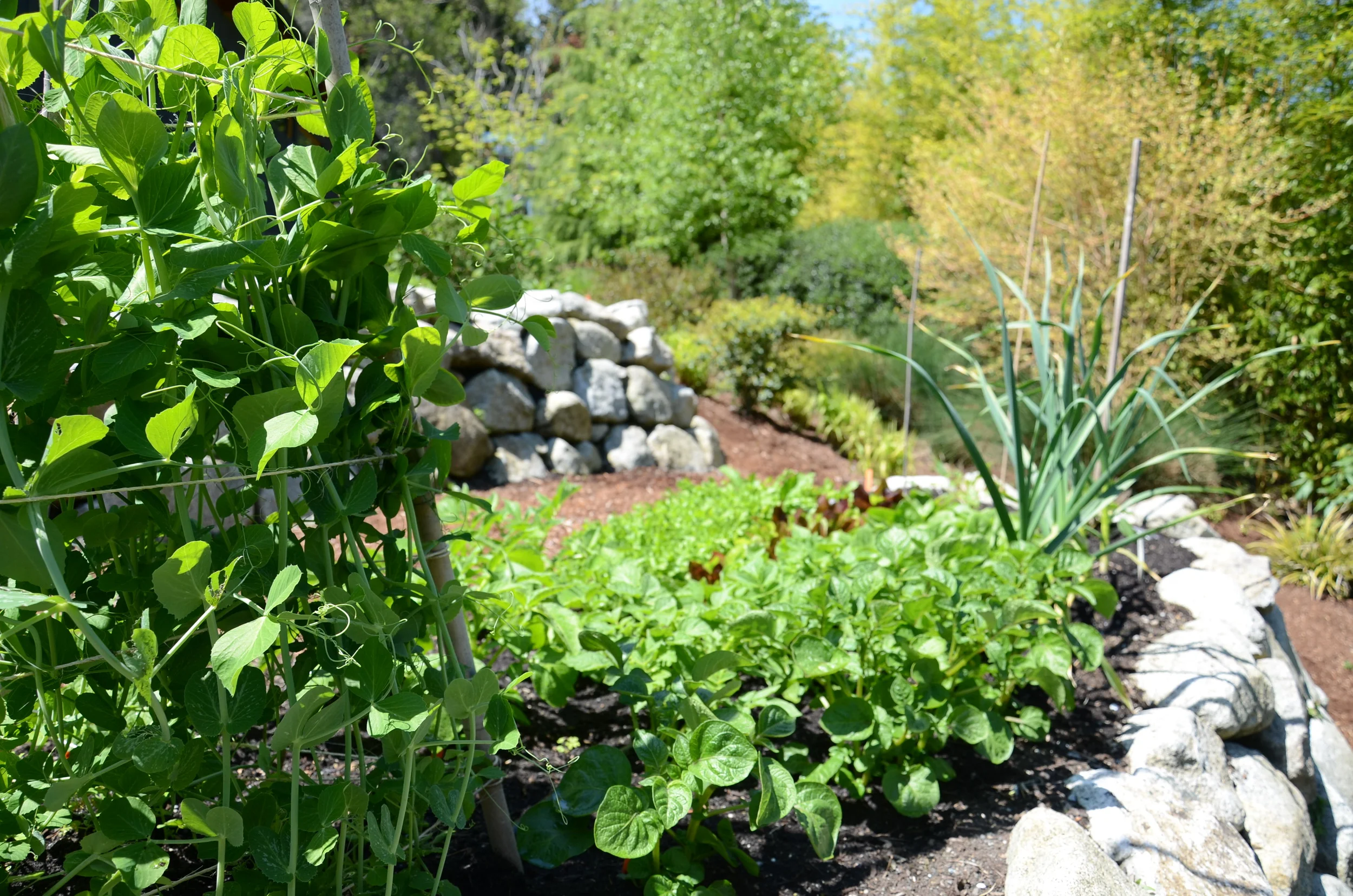
Place peas in a part of your garden where they won't shade other crops.

Place peas in a part of your garden where they won't shade other crops.

Harvested Oregon Giant Snow Peas

Harvested Oregon Giant Snow Peas


More on growing peas:
DSC_7854.jpg
March 27, 2025
How to Grow Peas Q +A
March 27, 2025

We often quote our book “Food Grown Right, In Your Backyard” and say that fresh snap peas are a reason unto themselves for having your own garden. I’ve never eaten a pea that has tasted as good as the ones I grow in my home garden and I want to you have the same experience. I’ve created this post to help answer your pea-growing questions and set you up for success!

Read more →
March 27, 2025
Episode 78: Veggie Garden Remix with Niki Jabbour
February 16, 2018
Episode 78: Veggie Garden Remix with Niki Jabbour
February 16, 2018

In this episode Hilary and guest expert Niki Jabbour discuss some of the unusual vegetable crops featured in Niki's new book, Veggie Garden Remix! If you're looking to add some variety to your garden this year or you've found yourself frustrated with some of the more traditional vegetable crops, this episode is packed with inspiration. 

Read more →
February 16, 2018
Episode 76: Sugar Snap Peas with Rod Lamborn
February 2, 2018
Episode 76: Sugar Snap Peas with Rod Lamborn
February 2, 2018

This week on the podcast I'm joined by guest expert, Rod Lamborn. Rod is the son of the well known plant breeder, Dr. Calvin Lamborn, who's also known as the Father of the Sugar Snap Pea. I'm sorry to say that Calvin passed away this past year, but it's an honor to have Rod here to share with us a little bit about his father's legacy and the future of the Sugar Snap Pea.

Read more →
February 2, 2018
Episode 52: July Listener Q+A
July 7, 2017
Episode 52: July Listener Q+A
July 7, 2017

This past month we rounded the corner into summer so many of the questions we've been getting in our Slack group the past few weeks have been about pest and disease issues, harvesting, and pruning. This week we're going to disucss a question about leaf miners, a cauliflower harvesting dilmema, stunted greens beans and irregular sugar snap peas.

Read more →
July 7, 2017
Encyclopedia Botanica Podcast, Episode 31: Peas!
February 10, 2017
Encyclopedia Botanica Podcast, Episode 31: Peas!
February 10, 2017

We think fresh homegrown peas are reason enough to have your own garden. This week we discuss how to plan for a grow peas in your garden

Read more →
February 10, 2017
powdery mildew_blog.jpg
June 28, 2016
Powdery Mildew
June 28, 2016

Powdery Mildew is caused by a fungus and, unlike many funguses; it can proliferate in hot dry conditions. It is recognizable by a white powdery growth of spores on leaf surface, followed by yellowing and dying of leaves.

Read more →
June 28, 2016
Bamboo Pea Tri-pod in Vegetable Garden_ Photo by Seattle Urban Farm Co.
March 10, 2015
How to Build a Bamboo Tri-pod Trellis: A Photo Tutorial
March 10, 2015

Many snap pea and snow pea varieties can easily grow to reach 7' tall so building a structure to support your pea vines is crucial. One of the most inexpensive, and easiest ways to create a tall semi-permanent trellising structure for your peas is with 8' bamboo poles (about $5 each at your local hardware store) and garden twine. The following photos show the process: 

Read more →
March 10, 2015
Powdery_Mildew_Squash.jpg
May 17, 2012
Organic Anti-Fungal Spray For Peas and Summer Squash
May 17, 2012

Anti-Fungal Baking Soda Spray

Read more →
May 17, 2012
March 29, 2012
Peas
March 29, 2012

Peas aren’t as good as turnips, but they are pretty good. Peas are the first crop that we plant outside in the spring

Read more →
March 29, 2012
Pea Tendril Heart_ Photo by Hilary Dahl for Seattle Urban Farm Co.
March 28, 2012
Train Your Peas!
March 28, 2012

Believe it or not pea plants do actually have a sense of touch.  This response to touch or contact with a solid object, called thigmotropism, is what causes pea tendrils to coil.  

Read more →
March 28, 2012

In Annual Vegetables, Spring Tags peas, sugar snap peas, cold tolerant, nitrogen-fixing, inoculant
← April Garden Challenge: Pest PreventionTrain Your Peas! →
No results found
The Freyr garden trellis by Seattle Urban Farm Co
All Posts By Topic
  • Annual Vegetables 123
  • Podcast 86
  • Spring 36
  • Summer 26
  • Fall 25
  • Garden Planning 24
  • Garden Design 21
  • Harvesting 19
  • Seattle Urban Farm Co 18
  • Winter 18
  • Flowers 15
  • Soil Care 14
  • Crop Planning 11
  • Drip Irrigation 11
  • Freyr trellis 11
  • Organic Pest Control 11
  • Organic Fertilizer 8
  • Container gardening 7
  • Fruit Trees 7
  • The Urban Fringe Farm 7
  • raised beds 7
  • Herbs 6
  • Perennial Vegetables 6
  • Pollinators 5
  • Bees 4
  • Berries 4
  • Crop Storage 4
  • Microgreens 4
  • Farmers 3
  • Our Friends 3
  • Projects 3
  • Chickens 2
  • Seed Starting 2
  • 2025 events 1
  • Crop Diseases 1
  • In The Press 1
  • Question of the Month 1

Our Books:

By McCrate, Colin, Halm, Brad
Order the Freyr trellis today!

Follow Us on Instagram


Featured
DSC_9353.JPG
April 10, 2025
How to grow tomatoes
April 10, 2025

Tomatoes are an incredible crop and probably the most popular garden vegetable. The tomato originated in South America and eventually made its way into the cuisine of just about every culture on the planet.

Read more →
April 10, 2025
Harvesting-homegrown-zucchini-off-of-the-Freyr-vegetable-garden-trellis.jpg
October 30, 2023
Crops you'll love to grow on the Freyr trellis!
October 30, 2023

A surprising number of annual crops benefit from the support of a trellis. Because we love trellised crops and because we’ve been trialing a ton of varieties, we started carrying a selection of Renee’s Garden seeds in our shop! Here is a short list of some of our favorite crops and varieties to grow vertically in the garden and links to our store where you can find our favorite types:

Read more →
October 30, 2023
Drip Irrigation How-To, Part 2
October 6, 2023
Drip Irrigation How-To, Part 2
October 6, 2023

Welcome to our new YouTube series! Learn how to pick a garden site, build vegetable garden beds and install drip irrigation.

Read more →
October 6, 2023

Shop | Contact | Trellis Guide | About | Our Books | Podcast | Wholesale | Subscribe

seattle urban farm company
Address: 4511 Shilshole Ave NW, Seattle, WA 98107
contact: info@seattleurbanfarmco.com

Featured in

Screen Shot 2019-04-11 at 2.13.41 PM.png
Screen Shot 2019-04-11 at 2.13.56 PM.png
Screen Shot 2019-04-11 at 2.14.09 PM.png
Screen Shot 2019-04-11 at 2.18.29 PM.png
Screen Shot 2019-04-11 at 2.20.19 PM.png

© Copyright 2024 – Seattle Urban Farm Company. All Rights Reserved.