Top
  • Home
  • Shop
  • About
  • Podcast & Blog
  • Our Books
  • Contact
  • Wholesale
Menu

Seattle Urban Farm Company - Garden trellises and supplies

Street Address
Seattle
206.816.9740
Grow a garden you love

Your Custom Text Here

Seattle Urban Farm Company - Garden trellises and supplies

  • Home
  • Shop
  • About
  • Podcast & Blog
  • Our Books
  • Contact
  • Wholesale

To Build Wood-Framed Beds, Or Not To Build Wood-Framed Beds?

January 28, 2020 hilary dahl
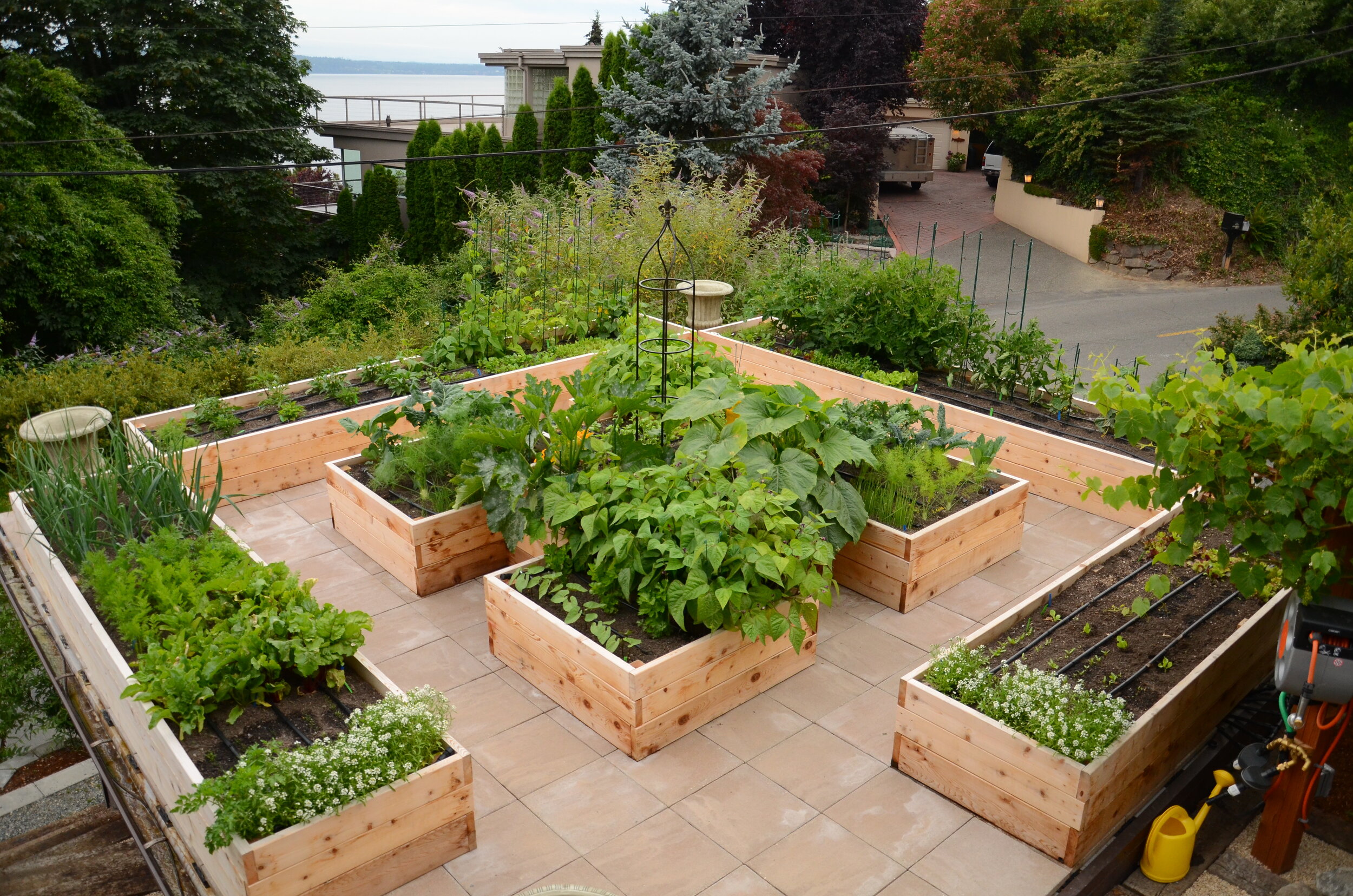
Rooftop Wood-Framed Raised Beds_Seattle Urban Farm CoJPG

“To build wood-framed beds, or not to build wood-framed beds?” That seems to be the question many gardeners have on their minds right now. There are pros and cons to both gardening system and I’ll be discussing them here. Both bed types are technically “raised” beds, so to start, I want to explain how I define the two different growing systems: 

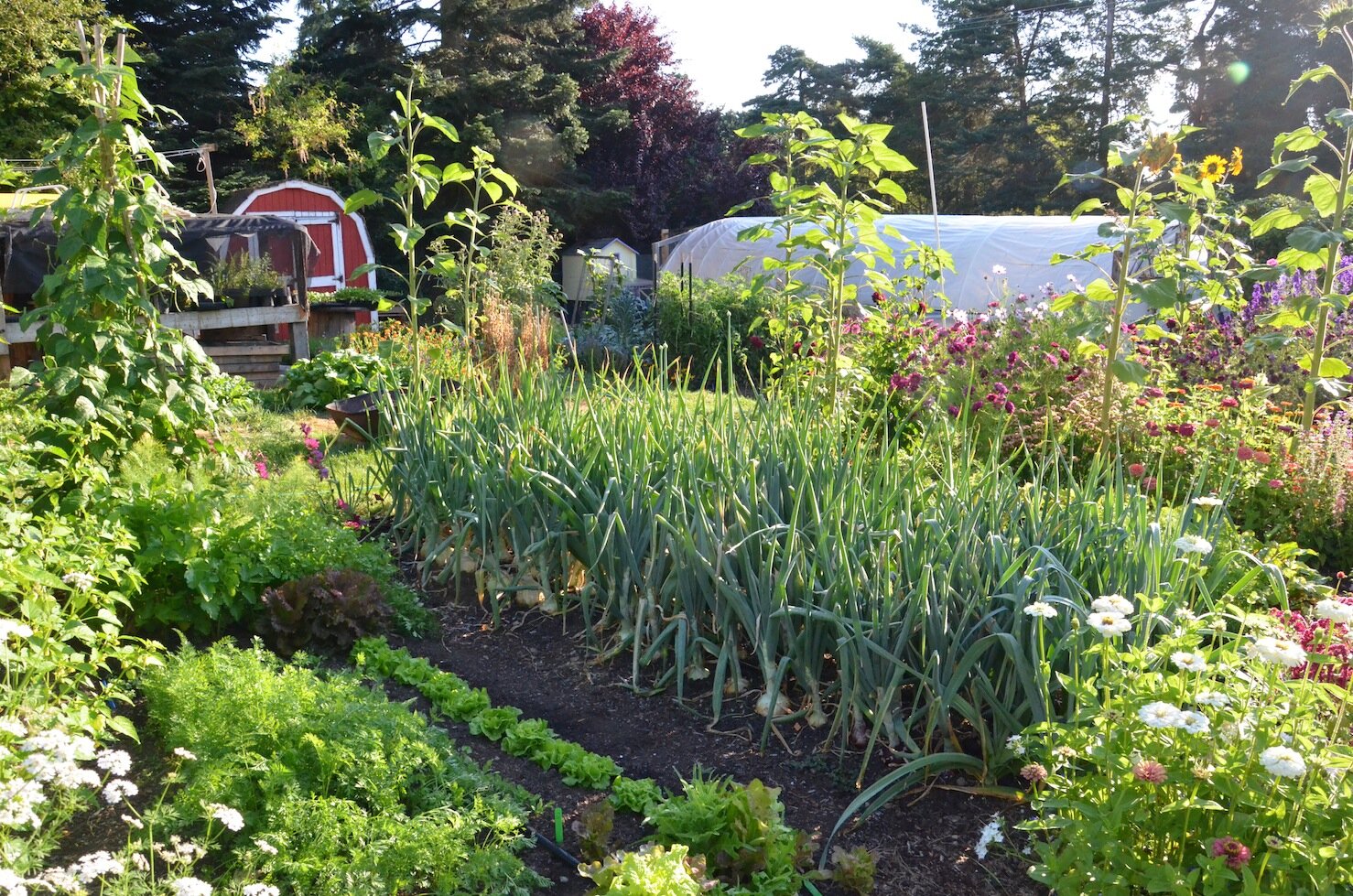
Mounded Bed Gardens: A mounded bed is a garden bed that is raised slightly (4–8 in.) above the surrounding area but isn’t bordered by a wooden frame. You can put a mounded bed garden in just about any spot in your yard that has enough sunlight and soil. You create it by loosening and lifting the existing soil and adding new soil and compost to improve its structure.

Wood-Framed Gardens: A wood-framed garden is similar to a mounded bed garden, but it’s contained in a large wooden frame (hence the name). The frame can be made of almost any type and size of lumber and can stand anywhere from a few inches (we recommend at least 12”) to a few feet tall. Square or rectangular shapes are relatively simple to build and are the preferred structure for many home gardeners.*

*If you look around at the gardens we’ve designed and built, you’ll see that there are other materials such as metal and stone, that work well as a building medium for framed gardens. For the sake of keeping things simple, we’ll just call them all wood-framed beds for now.

Advantages of mounded beds:

• They’re simple. You can easily build a few mounded raised beds in a day, and you don’t have to worry about gathering up a lot of extra materials to get started.

• They’re cheap. All you have to buy is soil, compost, and organic fertilizers.

• They fit easily into existing landscaping. Most ornamental landscaping beds are mounded raised beds, so if one of these exists in your ideal garden site already, all you have to do is pull out the unwanted plants and improve the soil.

• They’re easy to dress up. You can make attractive edges for mounded beds by surrounding them with stones, bricks, or any other material you may have on hand. This is especially useful for keeping garden soil from slumping into an adjacent driveway, path, or patio, and it can also slow (but not stop) the intrusion of grass into the beds.

Organic-shaped mounded bed garden_Seattle Urban Farm Co.JPG
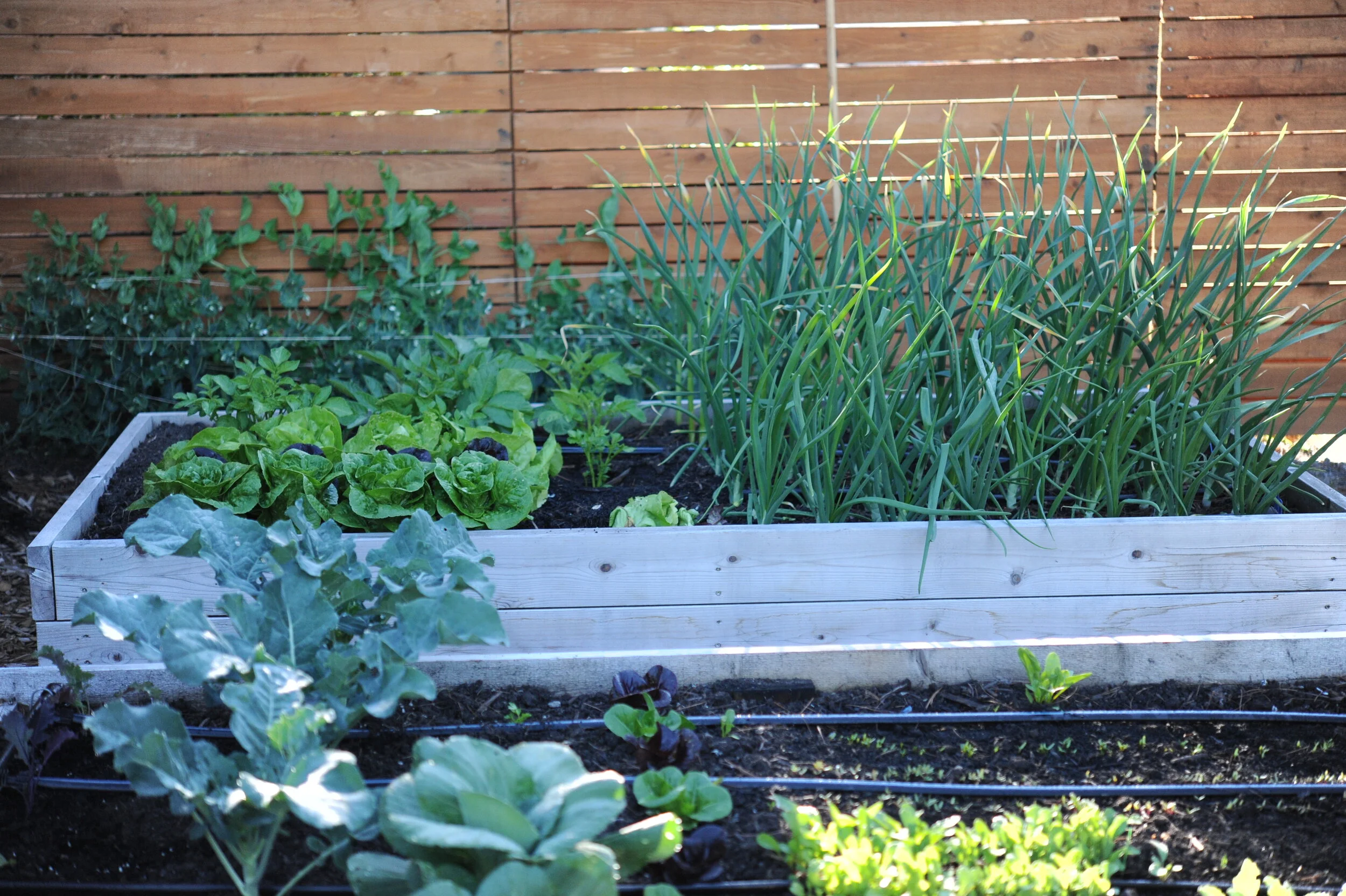
High-Yield Mounded Bed Garden_Seattle Urban Farm Co_onions_lettuce.JPG

Limitations of mounded beds:

• You must have a location that has both sun and non-contaminated soil.

• Root-intrusion from surrounding trees can be harder to control.

• Burrowing pests can be hard to keep at bay (think moles, voles and rabbits).

• Beds are lower to the ground so they can be harder to work in.

• Mounded beds can take a little more work to keep looking tidy.

Advantages of wood-framed gardens:

• They’re deep. The frame lets you pile a lot of new garden soil on top of the existing soil. This is a huge advantage if your yard is really rocky or the soil is so compacted that you’d otherwise have to work it with a pickaxe. You can build the beds, set them in place in your ideal location, fill them with soil, and start planting. There’s no need to do anything with the grass underneath.

• The depth also allows you to build on top of contaminated soils. If you are working on a site where the soil is contaminated, cover your garden area with gravel and place landscape fabric-lined beds on top. This will prevent the roots of your crops from penetrating the contaminated soil. Fill beds with new, compost rich soil.

• Wood-framed beds make keeping pest and roots from surrounding trees very easy. If we think a raised bed garden we’re designing and building may have pest or root pressure, we’ll line the beds with hardware cloth and landscape fabric to prevent burrowing pests and/or root intrusion.

• They allow for clearly defined paths and planting space. With the frames in place, there’s no worry about tramping on the edges of your beds.

• They’re easier on your back. You can build a wood frame as high as you like, which can be a plus if you want to minimize back stress.

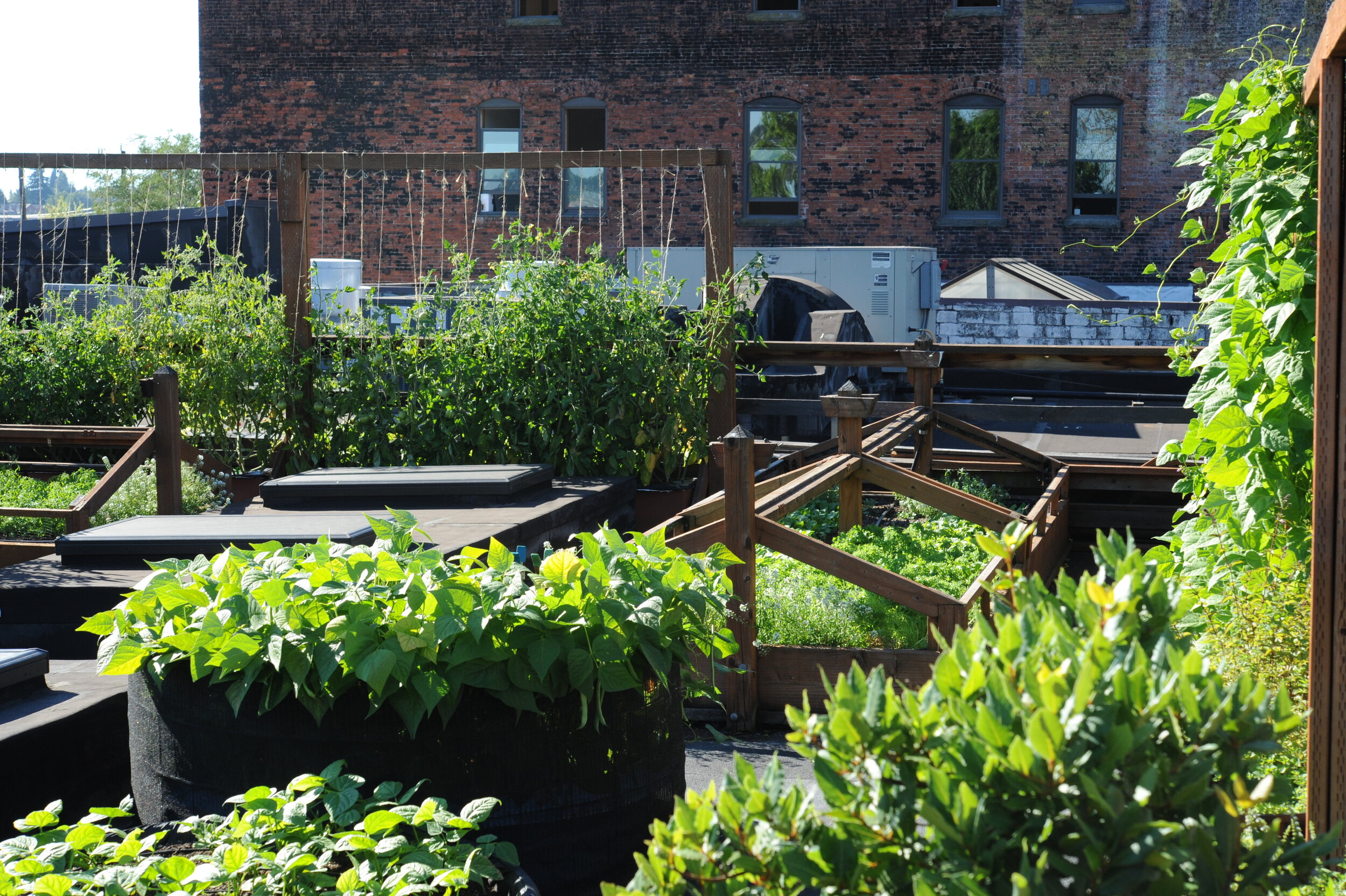
• They expand your garden location options. As long as you have sun, you can pretty much put raised beds anywhere: on top of concrete, on rooftops (pending an engineer's inspection), on steep slopes...so many possibilities!

• You can simplify your garden supply storage by building cold frame/shade cloth structures, trellises, and rabbit fencing right onto your wood-framed beds (see images below).

Hog-Wire Trellises on Wood-Framed Beds_Seattle Urban Farm Co.jpg
Cold Frames on Rooftop Raised Beds_Seattle Urban Farm Co.JPG

• They’re a good way to learn some new skills. If you’ve always wanted to learn a little basic woodworking, a wood-framed bed is a great first project.

Limitations of wood-framed gardens:

• You’ll end up investing more money in the initial set up.

• Unless you’re an extremely skilled craftsman, when it comes to wood-framed beds, you’re pretty much limited to working with rectilinear shapes. If your space is smaller, this can end up reducing to total amount of workable square footage you end up with.

Terraced raised beds_Seattle Urban Farm Co-3.jpg
Terraced Raised Beds with Rabbit Fencing_Seattle Urban Farm Co.JPG

More on Edible Garden Design:
SUFCo_Raised Beds.png
October 8, 2025
How to build wood-framed raised garden Beds
October 8, 2025

Pro tips on building durable, productive garden beds that fit your space and style.

Read more →
October 8, 2025
Oakleaf Papaya and Guava with Kyle Haggerty
December 9, 2024
Oakleaf Papaya and Guava with Kyle Haggerty
December 9, 2024

In this episode of the Encyclopedia Botanica podcast, Kyle from Urban Farmstead discusses his experiences growing subtropical plants like oak leaf papaya and various guava varieties in his Sacramento backyard.

Read more →
December 9, 2024
Fragrance in the Garden with Stefani Bittner
November 25, 2024
Fragrance in the Garden with Stefani Bittner
November 25, 2024

In episode 116 of the Encyclopedia Botanica podcast, host Hilary Dahl interviews Stefani Bittner, owner of Homestead Design Collective and author, about her latest book, 'The Fragrant Flower Garden.'

Read more →
November 25, 2024
The Food Forward Garden with Christian Douglas
November 18, 2024
The Food Forward Garden with Christian Douglas
November 18, 2024
Read more →
November 18, 2024
Drip Irrigation How-To, Part 2
October 6, 2023
Drip Irrigation How-To, Part 2
October 6, 2023

Welcome to our new YouTube series! Learn how to pick a garden site, build vegetable garden beds and install drip irrigation.

Read more →
October 6, 2023
Building a raised bed vegetable garden video: Drip Irrigation Parts List
March 16, 2022
Building a raised bed vegetable garden video: Drip Irrigation Parts List
March 16, 2022

Here’s a list of all the irrigation parts we talk about and use in our drip irrigation video series on building a raised bed vegetable garden:

Read more →
March 16, 2022
Our new how-to video series: Building a raised bed vegetable garden!
March 16, 2022
Our new how-to video series: Building a raised bed vegetable garden!
March 16, 2022

Welcome to our new YouTube series! Learn how to pick a garden site, build vegetable garden beds and install drip irrigation.

Read more →
March 16, 2022
Episode 113: Wood-Framed Raised Beds
November 17, 2021
Episode 113: Wood-Framed Raised Beds
November 17, 2021

In this episode Hilary and Colin answer a listener's questions about wood-framed raised bed construction best practices. Seattle Urban Farm Company has designed and built hundreds of custom raised bed gardens in the Seattle area, so check out this episode for an inside scoop on all of the pro tips!

Read more →
November 17, 2021
Crop Planning: A year in my home Garden
April 11, 2020
Crop Planning: A year in my home Garden
April 11, 2020

Crop planning for the vegetable garden often feels overwhelming to new (and experienced) growers. There are many different schools of thought on how to plan and layout annual crops. As a result, there’s lots of conflicting information out there to confuse the well-intentioned researcher.

At Seattle Urban Farm Co., we create plans for 70 gardens each year. Our garden plans are devised to maximize the garden’s productivity, while keeping them neat and tidy. We organize our plantings to make ongoing maintenance as easy as possible.

Read more →
April 11, 2020
Seattle Urban Farm Co_4x4' Rough Cut Cedar Beds.JPG
February 22, 2020
Drip Irrigation Q+A
February 22, 2020

Installing a drip irrigation system on an automatic timer is one of the most effective ways to improve your garden’s productivity, while saving you time and money. Drip irrigation is a system of narrow plastic tubes that deliver water at a slow rate directly to the surface of the soil. Since the water is emitted slowly, it has time to soak into the soil, rather than run off or through the soil. A properly installed and monitored drip system will deliver just the right amount of water with very little waste.

Read more →
February 22, 2020

Educational Resources We’ve Created for you!

High-Yield Vegetable Gardening: Grow More of What You Want in the Space You Have
By Colin McCrate, Brad Halm
Food Grown Right, In Your Backyard: A Beginner's Guide to Growing Crops at Home
By Colin McCrate, Brad Halm
In Garden Design, Garden Planning, raised beds Tags raised beds, wood framed beds, terraced raised beds, garden design, edible garden design, edible gardening, edible landcaping, vegetable gardening, vegetable garden design, kitchen garden, kitchen gardening
← Drip Irrigation Q+A Episode 108: Beets with Kellie Phelan →
No results found
The Freyr garden trellis by Seattle Urban Farm Co
All Posts By Topic
  • Annual Vegetables 123
  • Podcast 86
  • Spring 36
  • Summer 26
  • Fall 25
  • Garden Planning 24
  • Garden Design 21
  • Harvesting 19
  • Seattle Urban Farm Co 18
  • Winter 18
  • Flowers 15
  • Soil Care 14
  • Crop Planning 11
  • Drip Irrigation 11
  • Freyr trellis 11
  • Organic Pest Control 11
  • Organic Fertilizer 8
  • Container gardening 7
  • Fruit Trees 7
  • The Urban Fringe Farm 7
  • raised beds 7
  • Herbs 6
  • Perennial Vegetables 6
  • Pollinators 5
  • Bees 4
  • Berries 4
  • Crop Storage 4
  • Microgreens 4
  • Farmers 3
  • Our Friends 3
  • Projects 3
  • Chickens 2
  • Seed Starting 2
  • 2025 events 1
  • Crop Diseases 1
  • In The Press 1
  • Question of the Month 1

Our Books:

By McCrate, Colin, Halm, Brad
Order the Freyr trellis today!

Follow Us on Instagram


Featured
DSC_9353.JPG
April 10, 2025
How to grow tomatoes
April 10, 2025

Tomatoes are an incredible crop and probably the most popular garden vegetable. The tomato originated in South America and eventually made its way into the cuisine of just about every culture on the planet.

Read more →
April 10, 2025
Harvesting-homegrown-zucchini-off-of-the-Freyr-vegetable-garden-trellis.jpg
October 30, 2023
Crops you'll love to grow on the Freyr trellis!
October 30, 2023

A surprising number of annual crops benefit from the support of a trellis. Because we love trellised crops and because we’ve been trialing a ton of varieties, we started carrying a selection of Renee’s Garden seeds in our shop! Here is a short list of some of our favorite crops and varieties to grow vertically in the garden and links to our store where you can find our favorite types:

Read more →
October 30, 2023
Drip Irrigation How-To, Part 2
October 6, 2023
Drip Irrigation How-To, Part 2
October 6, 2023

Welcome to our new YouTube series! Learn how to pick a garden site, build vegetable garden beds and install drip irrigation.

Read more →
October 6, 2023

Shop | Contact | Trellis Guide | About | Our Books | Podcast | Wholesale | Subscribe

seattle urban farm company
Address: 4511 Shilshole Ave NW, Seattle, WA 98107
contact: info@seattleurbanfarmco.com

Featured in

Screen Shot 2019-04-11 at 2.13.41 PM.png
Screen Shot 2019-04-11 at 2.13.56 PM.png
Screen Shot 2019-04-11 at 2.14.09 PM.png
Screen Shot 2019-04-11 at 2.18.29 PM.png
Screen Shot 2019-04-11 at 2.20.19 PM.png

© Copyright 2024 – Seattle Urban Farm Company. All Rights Reserved.