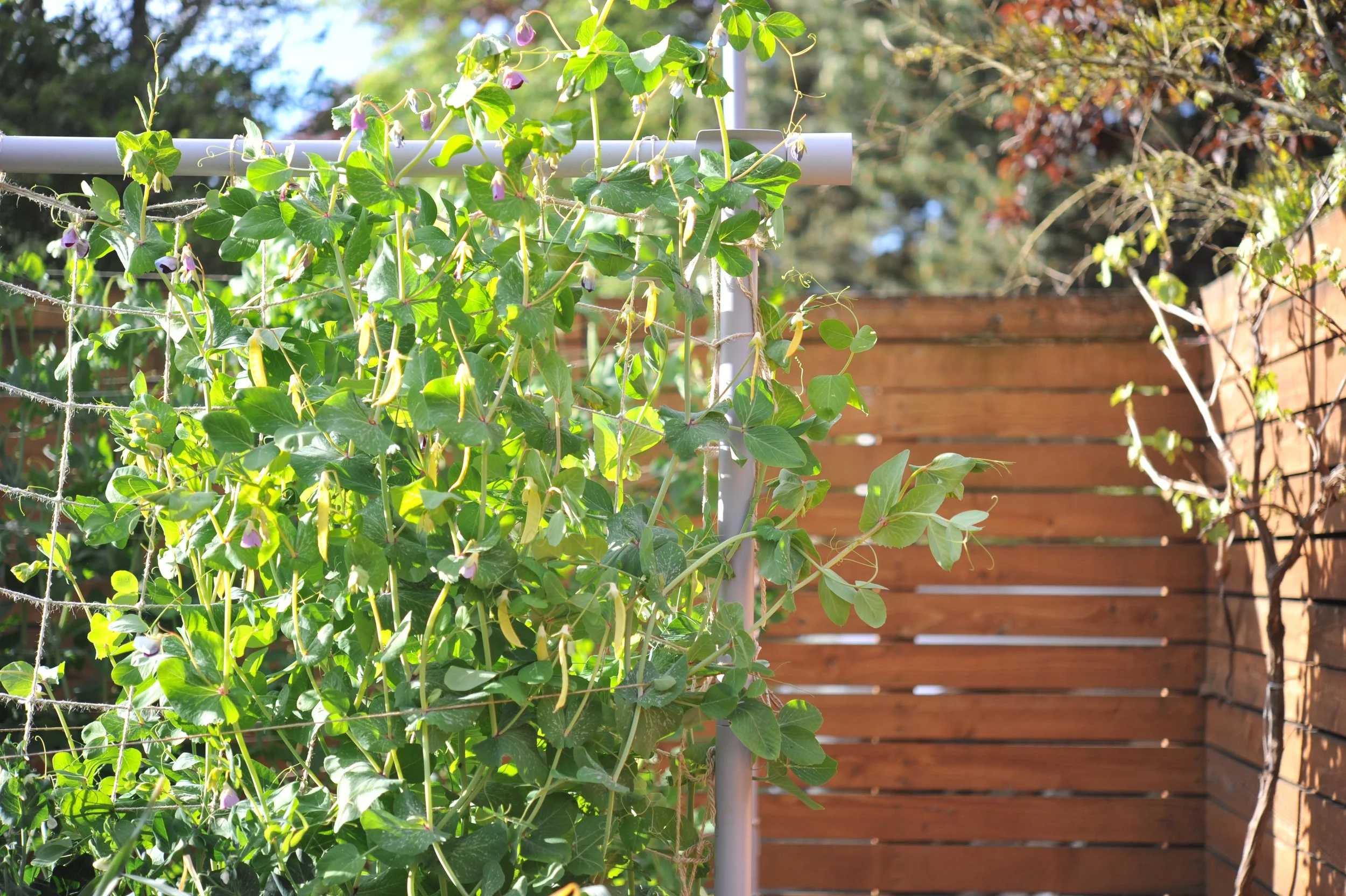
Our compostable nets can be used to support plants both vertically and horizontally.
Vertical training
When set up vertically, nets provide a ready-to-go structure for your plants to grow up.
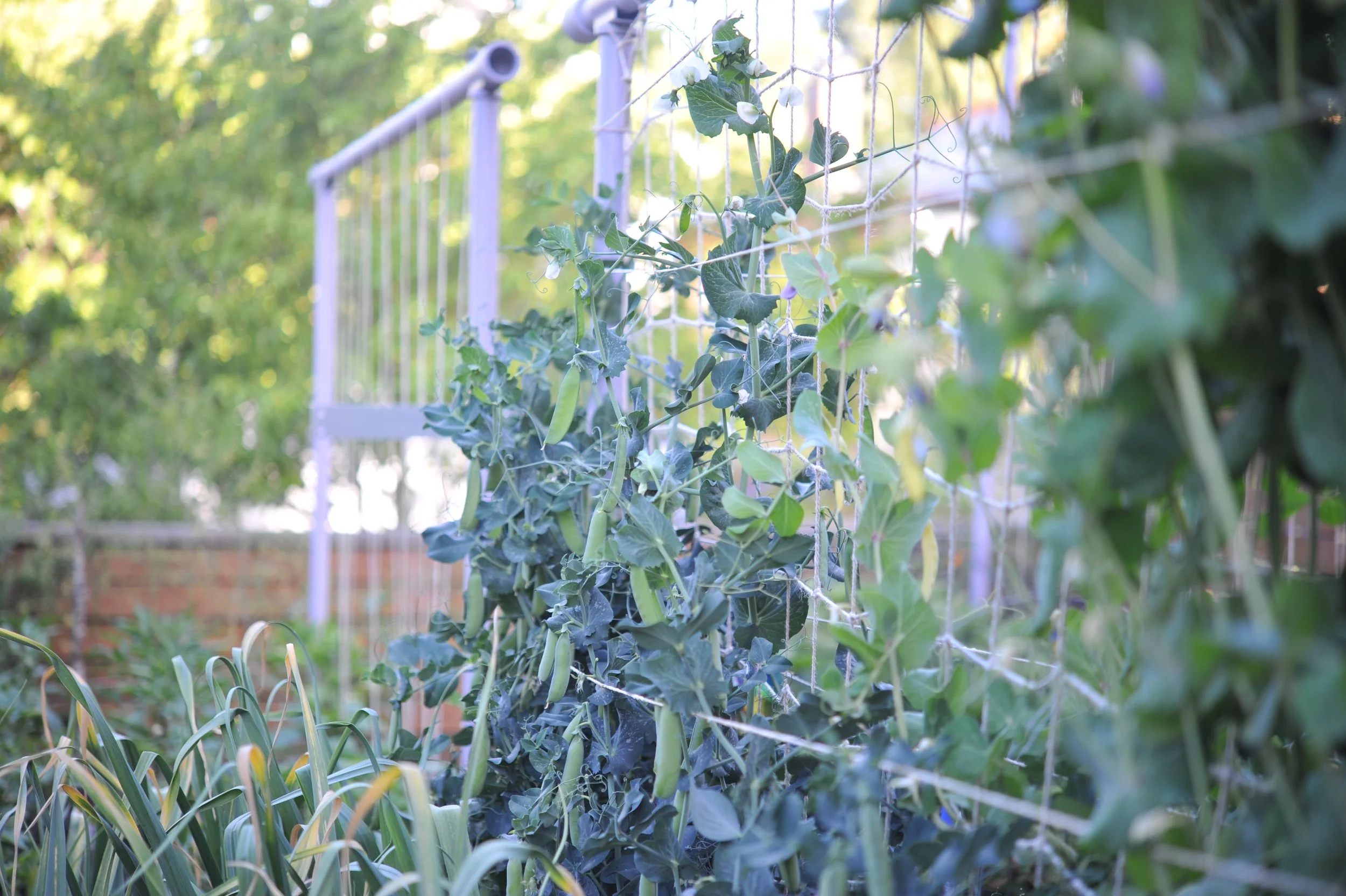
Shelling pea vines (shown here) and snap pea vines can get really heavy with fruit. We like to tie them back even when using a net, to ensure they don’t flop over onto our other plants.
Keep in mind that not all vining plants will climb. Some plants like pole beans and cucumbers have strong tendrils that will wrap themselves around your support, while crops like tomatoes and peas need a little extra attention.
Tips for vertical training:
Secure the net on both sides, and across the top if possible. Our nets have loops along the top of the net for easy installation. If you’re not using a support that allows you to use the loops, simply snip them in half and use them like the ties along the sides.
Plant your crops directly along the base of the net.
When your plants are small, feel free to wind them in and out of the net as long as they are flexible enough to do so without breaking.
Consider adding a simple horizontal string of twine every few feet along the front edge of the plants growing along the net. This will help stabilize heavy, fruit laden vines and make sure they don’t pull free of the net. We have used this technique for decades when growing peas specifically, because the pea plants are often too heavy for their delicate tendrils to support. Tying back your pea plants with a few additional horizontal rows of string also keeps the plants from shading out whatever may be growing in front of them, and helps to maximize your garden space.
Use compostable trellis clips to attach the plant to the netting if needed. This can be helpful for particularly large branches and stems, or when supporting branches that are heavy with fruit.
Horizontal training
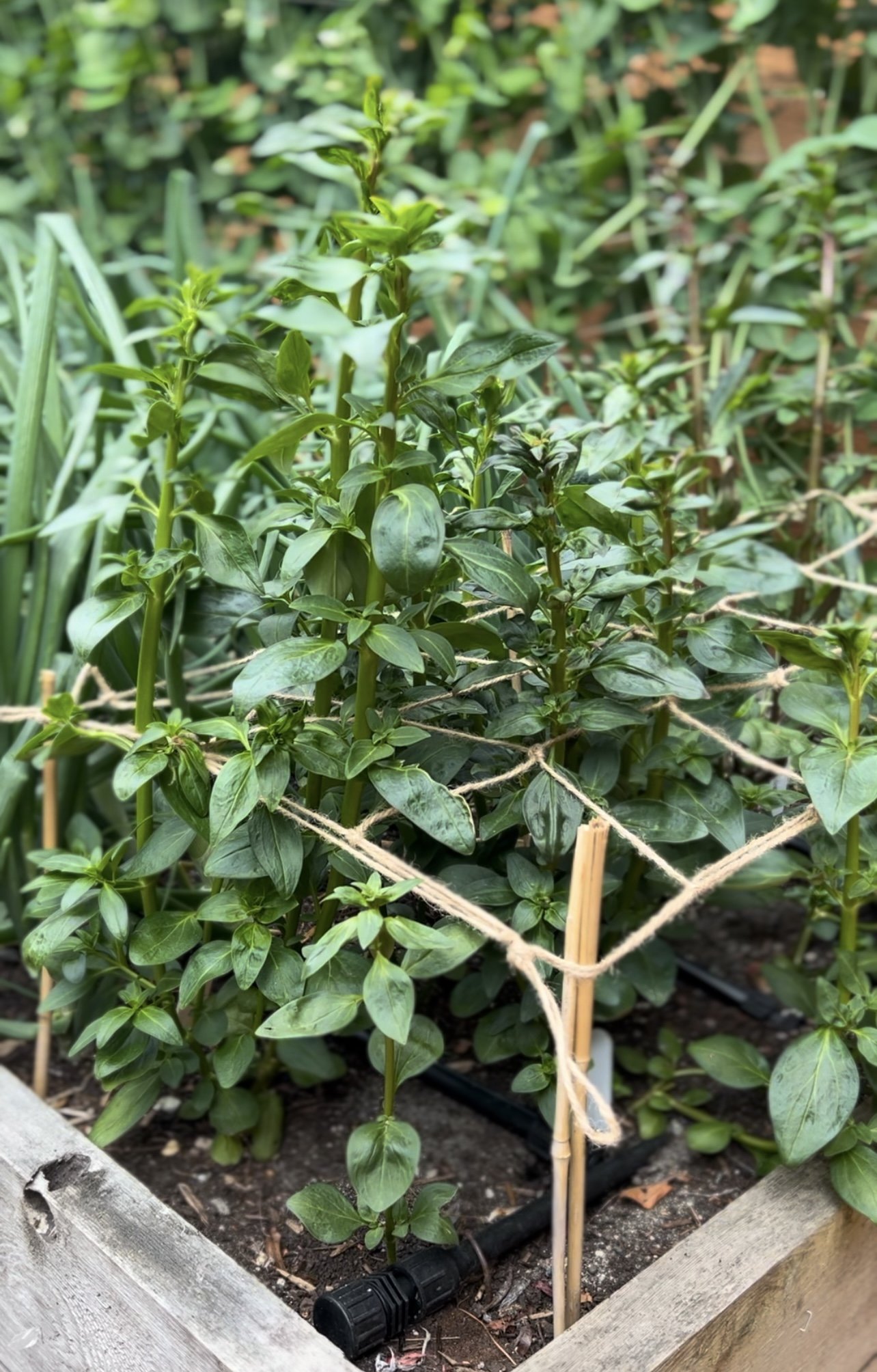
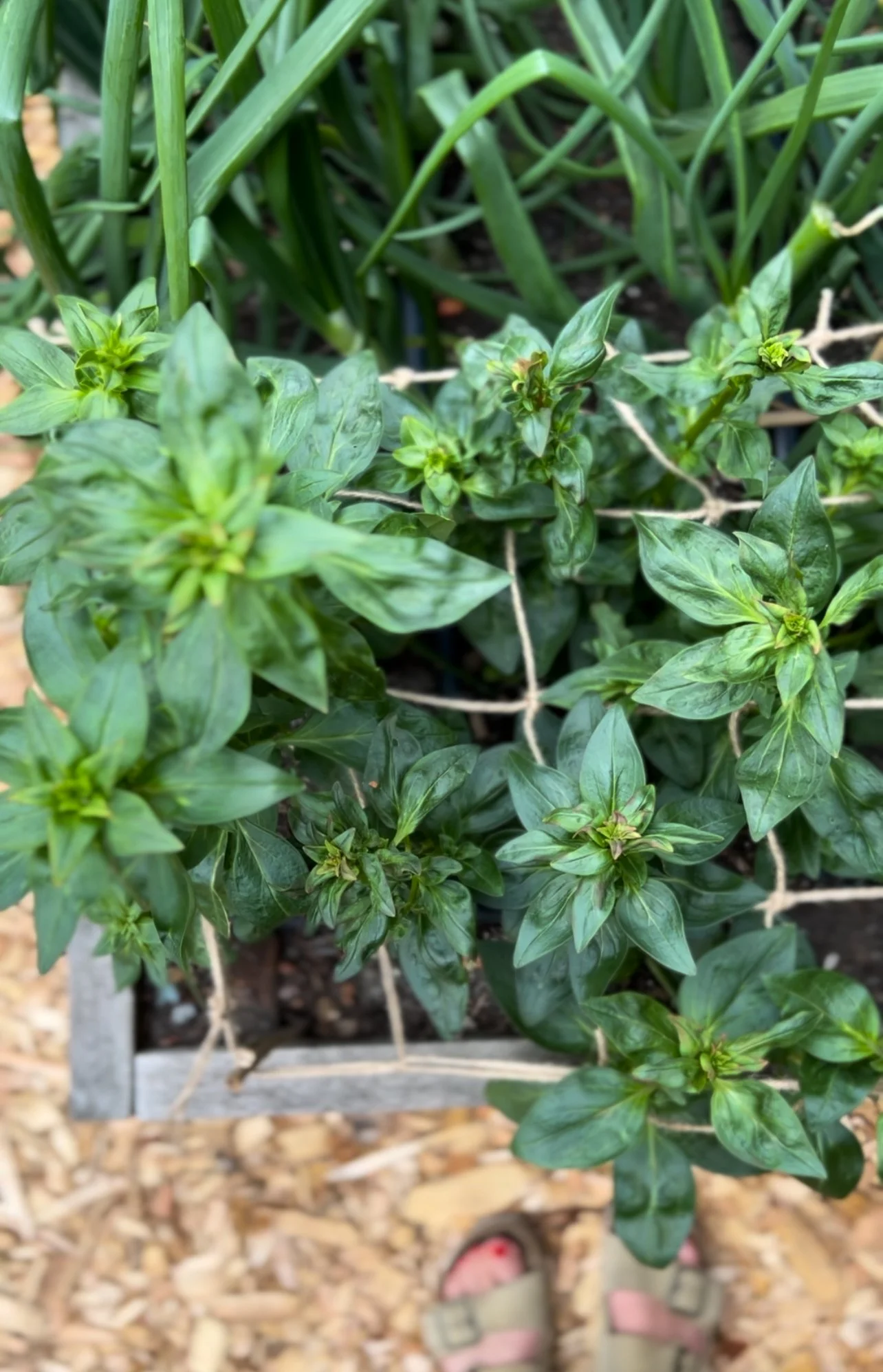
When used as a horizontal support, they provide a cage-like structure for tall crops such as snapdragons and fava beans.
Tips for horizontal training:
Start early. Install the netting before plants get too tall, and begin training them as soon as they start to grow.
Place the netting at about ½ of the mature height of your plant. This placement provides support for the plants, while also maintaining access for harvesting, especially when one needs to access long stems for flower harvesting.
We like to use bamboo stakes to secure the corners of our horizontal nets, but any stake, found, foraged or purchased, that’s tall enough to support your net will do.
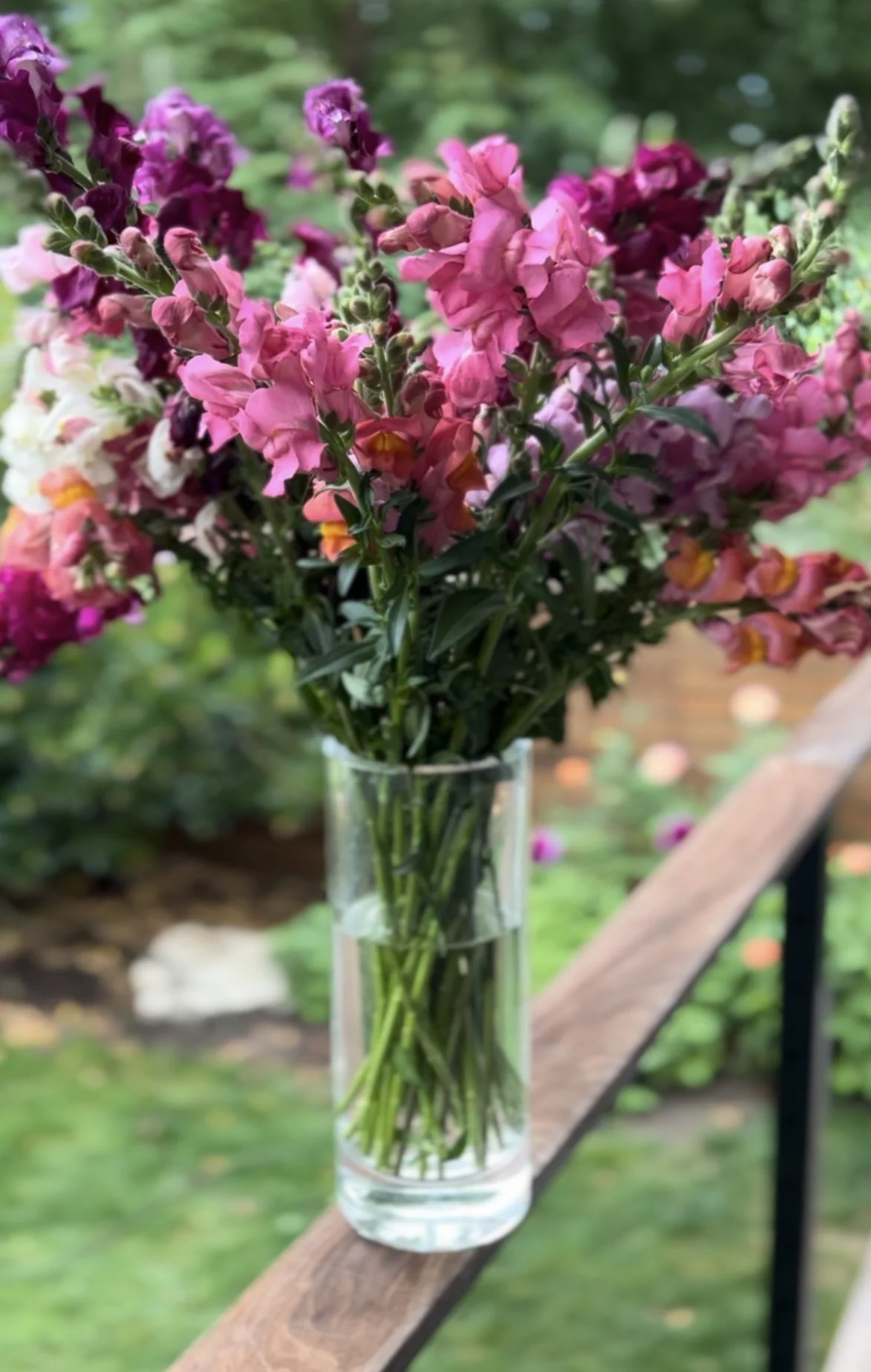
The following is an example of a simple horizontal training structure we set up for snapdragons growing at the end of one of our raised beds. The net is about 18 inches above the bed (I’d actually set it up even higher for this variety in the future). These plants thrived and bloomed for months! The tall stems in the vase were harvested in August, so the plants had already been blooming for months, and we’re still producing long, straight, sturdy stems.