Top
  • Home
  • Shop
  • About
  • Podcast & Blog
  • Our Books
  • Contact
  • Wholesale
Menu

Seattle Urban Farm Company - Garden trellises and supplies

Street Address
Seattle
206.816.9740
Grow a garden you love

Your Custom Text Here

Seattle Urban Farm Company - Garden trellises and supplies

  • Home
  • Shop
  • About
  • Podcast & Blog
  • Our Books
  • Contact
  • Wholesale

Episode 88: Backyard Honeybee Habitat with Mace Vaughn of The Xerces Society

May 5, 2018 hilary dahl
bumblebee_ blog.jpg

Backyard beekeeping of honeybees is a great way to increase the number of pollinators in your garden, learn about how pollination works and, of course, the hives provide you with your own source of local honey. One thing that is not commonly discussed is that honeybees are not native to North America. While honeybees are very beneficial, there are also many species of native bees that could use help too. Today we are going to talk a bit about native bees and why its important to create habitat for native pollinators, especially if you're a backyard honeybee keeper.


HOW TO LISTEN:

  • Subscribe in iTunes , Stitcher, or any of your favorite podcast players to have new episodes sent directly to your device.

  • Listen right now in your browser by clicking above.

SHOW NOTES:

  • Backyard beekeeping of honeybees is a great way to increase the number of pollinators in your garden, learn about how pollination works and, of course, the hives provide you with your own source of local honey. One thing that is not commonly discussed is that honeybees are not native to North America. While honeybees are very beneficial, there are around 3,600 different species of native bees that could use help too.

  • Originating from Europe and Asia, the honeybee is not native to North America.

  • Honeybees are not able to pollinate all flowers. For example, honeybees do not pollinate tomatoes because they cannot get the pollen from the flowers and because the flowers do not produce nectar. Many native bees, however, know the trick to extracting tomato pollen and are, therefore, valuable pollinators.

  • Honeybees live in large colonies and are heavy feeders. If you introduce them into your garden or farm, they'll compete for resources with the native bee populations. If the resources are limited, the honeybees could end up pushing out your native bees, so it's important to add additional pollinator habitat if you're keeping honeybees in your backyard.

Below: Ground nesting bee or a "Tickle bee"

Photo by Mace Vaughn

Photo by Mace Vaughn


Excellent books by The Xerces Society:
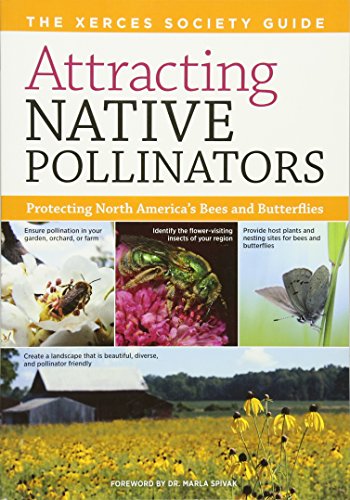
Attracting Native Pollinators: The Xerces Society Guide, Protecting North America's Bees and Butterflies
By The Xerces Society
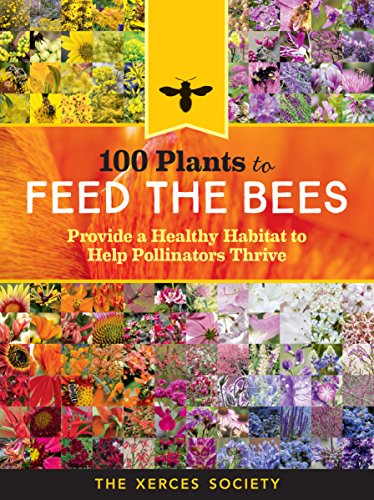
100 Plants to Feed the Bees: Provide a Healthy Habitat to Help Pollinators Thrive
By The Xerces Society
Farming with Native Beneficial Insects: Ecological Pest Control Solutions by Xerces Society, The (2014) Paperback
Storey Publishing, LLC
Gardening for Butterflies: How You Can Attract and Protect Beautiful, Beneficial Insects
By The Xerces Society

More on Pollinators
DSC_4723.jpg
November 18, 2025
How to Plant Poppies for a Colorful Spring Display
November 18, 2025

Poppies are one of the easiest—and most rewarding—flowers you can grow. Their delicate petals and vibrant colors add whimsical charm to any garden. The best part? They thrive with very little fuss, as long as you plant them the right way.

Read more →
November 18, 2025
Fragrance in the Garden with Stefani Bittner
November 25, 2024
Fragrance in the Garden with Stefani Bittner
November 25, 2024

In episode 116 of the Encyclopedia Botanica podcast, host Hilary Dahl interviews Stefani Bittner, owner of Homestead Design Collective and author, about her latest book, 'The Fragrant Flower Garden.'

Read more →
November 25, 2024
DSC_9397.jpg
October 6, 2022
Saving your flower seeds
October 6, 2022

Seed saving is the art of collecting the seed from your crop and using it in subsequent seasons to grow new plants. If you want to ease your way into seed saving, some of the simplest crops to save are annual flowers!

Read more →
October 6, 2022
Episode 100: Edible Flowers with Rosalind Creasy
April 12, 2019
Episode 100: Edible Flowers with Rosalind Creasy
April 12, 2019

Hilary talks with legendary garden writer, Rosalind Creasy about the joys and perils of eating flowers. 

Read more →
April 12, 2019
Episode 98: Backyard Cutting Garden with Kelly Sullivan
March 29, 2019
Episode 98: Backyard Cutting Garden with Kelly Sullivan
March 29, 2019

Guest Kelly Sullivan of Botanique Flowers, a Seattle-based floral design studio, talks with Hilary about how she turned her 6,000 square foot city lot into a productive flower farm. 

Read more →
March 29, 2019
Episode 88: Backyard Honeybee Habitat with Mace Vaughn of The Xerces Society
May 5, 2018
Episode 88: Backyard Honeybee Habitat with Mace Vaughn of The Xerces Society
May 5, 2018

Backyard beekeeping of honeybees is a great way to increase the number of pollinators in your garden, learn about how pollination works and, of course, the hives provide you with your own source of local honey. One thing that is not commonly discussed is that honeybees are not native to North America. While honeybees are very beneficial, there are also many species of native bees that could use help too. Today we are going to talk a bit about native bees and why its important to create habitat for native pollinators, especially if you're a backyard honeybee keeper.

Read more →
May 5, 2018
Episode 82: Pollinator Gardens with Justin Wheeler
March 16, 2018
Episode 82: Pollinator Gardens with Justin Wheeler
March 16, 2018

In this episode, Hilary and guest expert Justin Wheeler of the Xerces Society will be talking about how to create an effective pollinator habitat in your garden by choosing cultivars that support beneficial insects.

Read more →
March 16, 2018
Episode 80: March Slack Q+A with Colin McCrate
March 2, 2018
Episode 80: March Slack Q+A with Colin McCrate
March 2, 2018

This week we're bring back the Slack Q+A episodes. The questions that make up the content for these episodes are pulled from our online Slack group, which is an online community where you can share questions and gardening tips with me and an awesome group of edible gardeners

Read more →
March 2, 2018
Episode 79: Sweet Peas with Simon Crawford
February 23, 2018
Episode 79: Sweet Peas with Simon Crawford
February 23, 2018

In this episode Hilary and guest expert Simon Crawford, of Owls Acre Seed, discuss just about everything you need to know to grow gorgeous sweet peas!

Read more →
February 23, 2018
Episode 75: Growing Dahlias with Nick Gitts
January 26, 2018
Episode 75: Growing Dahlias with Nick Gitts
January 26, 2018

In this episode Nick Gitts, owner of Swan Island Dahilas, answers all of my burning dahlia care questions. Swan Island Dahlias is a 40 acre dahlia farm located in the Willamette Valley of Oregon and they grow over 360 varieties of dahlias and Nick has been running the farm since 1975. 

Read more →
January 26, 2018

Like what you hear? Please share our podcast with a friend. Subscribe on iTunes or your favorite podcast player so you never miss a beat. And we'd really appreciate you showing us some love by leaving a rating and review on iTunes. 

Have a topic you'd like see us dig in to? Leave us a note in the comment section below or #EBpodcast on Instagram and Twitter!

Your support is what keeps this podcast going! Any amount helps, so consider support us by making a one-time contribution:  


Mace Vaughan_ Encyclopedia Botanica.jpg

More about our Guest Expert:

Mace Vaughan serves as The Xerces Society’s Pollinator Conservation Program Co-Director and also as a partner biologist and Pollinator Conservation Specialist with the USDA NRCS West National Technology Support Center in Portland, Oregon. Mace has led Xerces’ Pollinator Conservation Program since 2003. During his tenure at the Xerces Society, the pollinator program has grown from a small pilot project on California farms to a national, multi-million dollar program, implementing pollinator conservation projects across the US.  Helping to oversee a team of twenty-four pollinator conservation specialists and several consultants across the U.S., Mace now helps to manage the largest pollinator conservation team in the country.

Mace has written numerous articles on the conservation of beneficial insects, and is co-author of several books, including Attracting Native Pollinators: Protecting North America’s Bees and Butterflies and Farming with Native Beneficial Insects. He was a lecturer on honey bee biology and beekeeping at Cornell University, from which he holds Degrees in Entomology, Natural Resource Management, and Teaching.

Website: xerces.org
Instagram: @xercessociety
Facebook: @xercessociety


Hilary Dahl_Seattle Urban Farm Co.

About the Host:
 

Hello, I’m Hilary Dahl. Outside of this podcast, my job is to help beginning and experienced growers create beautiful and productive gardens. I have the unique experience of working in on a wide range of projects, from small backyard garden plots to multi-acre vegetable farms. I also work in my own garden every day when I get home. This podcast is an opportunity to discuss seasonal garden topics and share the the joy of growing your own food. 

In Flowers, Garden Design, Podcast, Bees, Pollinators Tags Encyclopedia Botanica, Podcast, honeybees, backyard bees, beekeeping, pollinators, backyard honeybees, pollinator garden, bee friendly garden, bee garden, beneficial insects, attracting beneficial insects to your garden
← Episode 89: CauliflowerEpisode 87: Growing Citrus with Angela Judd →
No results found
The Freyr garden trellis by Seattle Urban Farm Co
All Posts By Topic
  • Annual Vegetables 123
  • Podcast 86
  • Spring 36
  • Summer 26
  • Fall 25
  • Garden Planning 24
  • Garden Design 21
  • Harvesting 19
  • Seattle Urban Farm Co 18
  • Winter 18
  • Flowers 15
  • Soil Care 14
  • Crop Planning 11
  • Drip Irrigation 11
  • Freyr trellis 11
  • Organic Pest Control 11
  • Organic Fertilizer 8
  • Container gardening 7
  • Fruit Trees 7
  • The Urban Fringe Farm 7
  • raised beds 7
  • Herbs 6
  • Perennial Vegetables 6
  • Pollinators 5
  • Bees 4
  • Berries 4
  • Crop Storage 4
  • Microgreens 4
  • Farmers 3
  • Our Friends 3
  • Projects 3
  • Chickens 2
  • Seed Starting 2
  • 2025 events 1
  • Crop Diseases 1
  • In The Press 1
  • Question of the Month 1

Our Books:

By McCrate, Colin, Halm, Brad
Order the Freyr trellis today!

Follow Us on Instagram


Featured
DSC_9353.JPG
April 10, 2025
How to grow tomatoes
April 10, 2025

Tomatoes are an incredible crop and probably the most popular garden vegetable. The tomato originated in South America and eventually made its way into the cuisine of just about every culture on the planet.

Read more →
April 10, 2025
Harvesting-homegrown-zucchini-off-of-the-Freyr-vegetable-garden-trellis.jpg
October 30, 2023
Crops you'll love to grow on the Freyr trellis!
October 30, 2023

A surprising number of annual crops benefit from the support of a trellis. Because we love trellised crops and because we’ve been trialing a ton of varieties, we started carrying a selection of Renee’s Garden seeds in our shop! Here is a short list of some of our favorite crops and varieties to grow vertically in the garden and links to our store where you can find our favorite types:

Read more →
October 30, 2023
Drip Irrigation How-To, Part 2
October 6, 2023
Drip Irrigation How-To, Part 2
October 6, 2023

Welcome to our new YouTube series! Learn how to pick a garden site, build vegetable garden beds and install drip irrigation.

Read more →
October 6, 2023

Shop | Contact | Trellis Guide | About | Our Books | Podcast | Wholesale | Subscribe

seattle urban farm company
Address: 4511 Shilshole Ave NW, Seattle, WA 98107
contact: info@seattleurbanfarmco.com

Featured in

Screen Shot 2019-04-11 at 2.13.41 PM.png
Screen Shot 2019-04-11 at 2.13.56 PM.png
Screen Shot 2019-04-11 at 2.14.09 PM.png
Screen Shot 2019-04-11 at 2.18.29 PM.png
Screen Shot 2019-04-11 at 2.20.19 PM.png

© Copyright 2024 – Seattle Urban Farm Company. All Rights Reserved.