Top
  • Home
  • Shop
  • About
  • Podcast & Blog
  • Our Books
  • Contact
  • Wholesale
Menu

Seattle Urban Farm Company - Garden trellises and supplies

Street Address
Seattle
206.816.9740
Grow a garden you love

Your Custom Text Here

Seattle Urban Farm Company - Garden trellises and supplies

  • Home
  • Shop
  • About
  • Podcast & Blog
  • Our Books
  • Contact
  • Wholesale

How to Plant Garlic

October 12, 2026 hilary dahl
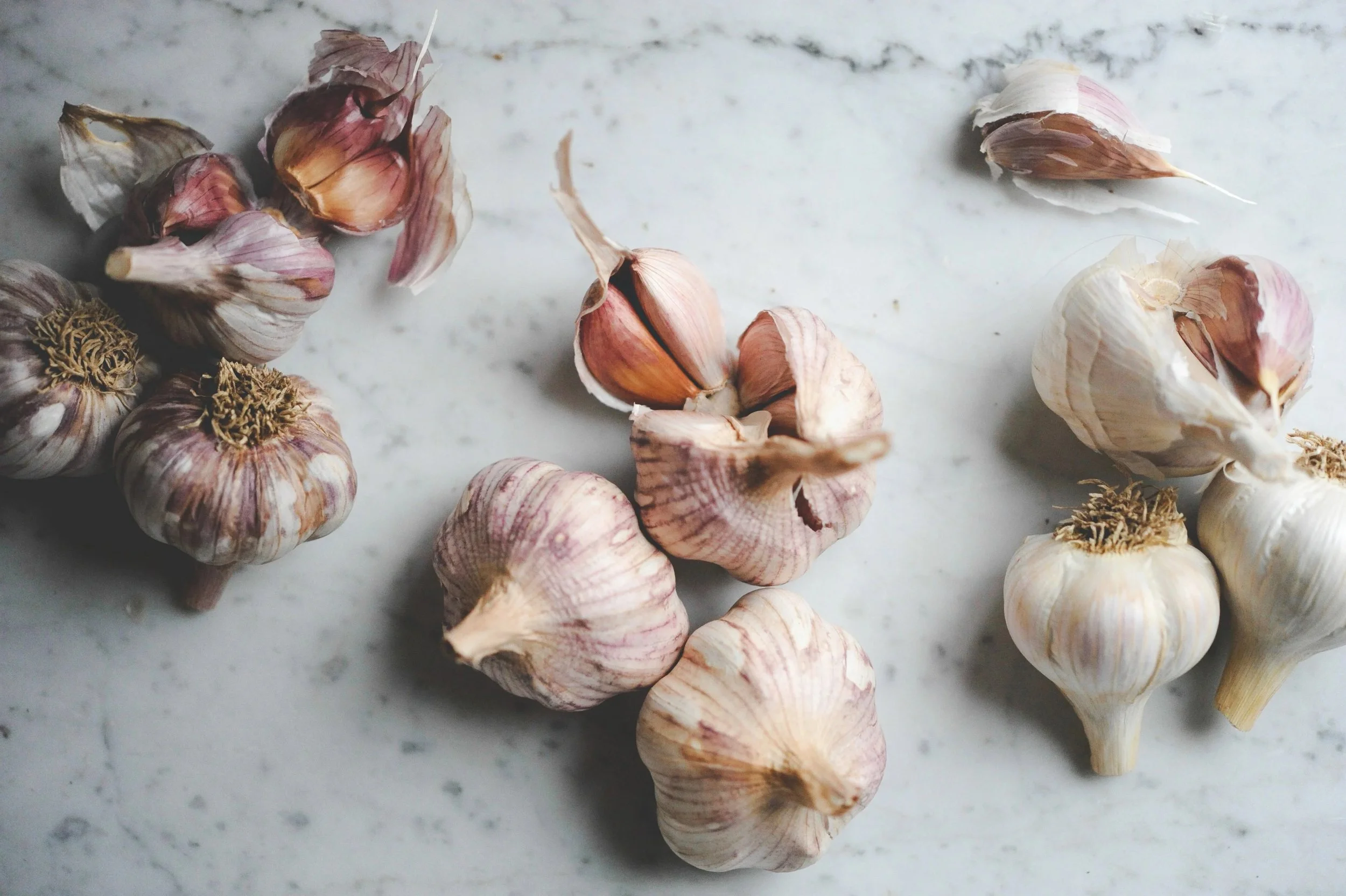
Homegrown garlic seed

Homegrown seed garlic

How to Plant Garlic This Fall

Garlic is a member of the Allium family, which also includes onions, scallions, shallots and leeks. It is a very long season crop, meaning that it takes a long time to mature in the garden.

Why plant in the fall?

Garlic grows best when planted in the fall because it requires vernalization to grow properly.  Vernalization is a horticultural term that means that it will grow best after prolonged exposure to cold temperatures.  In the case of garlic, this exposure to cold helps initiate cell division, leading to a large head of garlic with numerous cloves.  Each individual clove of garlic you plant will yield an entire head/bulb of garlic the following season. 

How to plant garlic

  1. Choose your seed stock. Look for seed garlic at a local nursery or online. If you can’t find any, you can plant organic garlic from the produce section of your grocery store. Choose tight heads with large, firm cloves.

  2. Prepare the soil. Loosen the soil, check the pH, and mix in compost or a balanced fertilizer.

  3. Plant the cloves. Set them pointy side up, 5–6 inches apart and 2–3 inches deep, depending on the size of the clove. The top of each clove should sit under at least 1 inch of soil. If your ground freezes and thaws regularly, plant a little deeper so the cloves aren’t pushed out of the soil as temperatures change.

  4. Watch for shoots. They should start to emerge in early spring!

  5. Feed in spring. Once the shoots are up, side-dress with a balanced granular fertilizer.

Hardneck vs. softneck

Garlic comes in two general categories: hardneck and softneck (there is also a type called elephant garlic, but this is not a “true” garlic and has somewhat different cultural needs, so we are not including it in our discussion).  If you have room, I’d recommend planting both hardneck and softneck garlic in the home garden. 

Hardneck garlic has a stiff central stem and fewer, larger cloves than softneck. Its storage life is shorter, so it’s usually grown for specialty markets such as restaurants and farmers markets. Many people feel it has better flavor and is easier to peel. Hardneck is also the source of garlic scapes, the coveted edible flower stalk the plant sends up in late spring.

Softneck garlic has a flexible central stem, and its bulbs tend to have many small cloves and thick wrapper skins. It stores well, which is why it’s the type you’ll most often find at the grocery store.
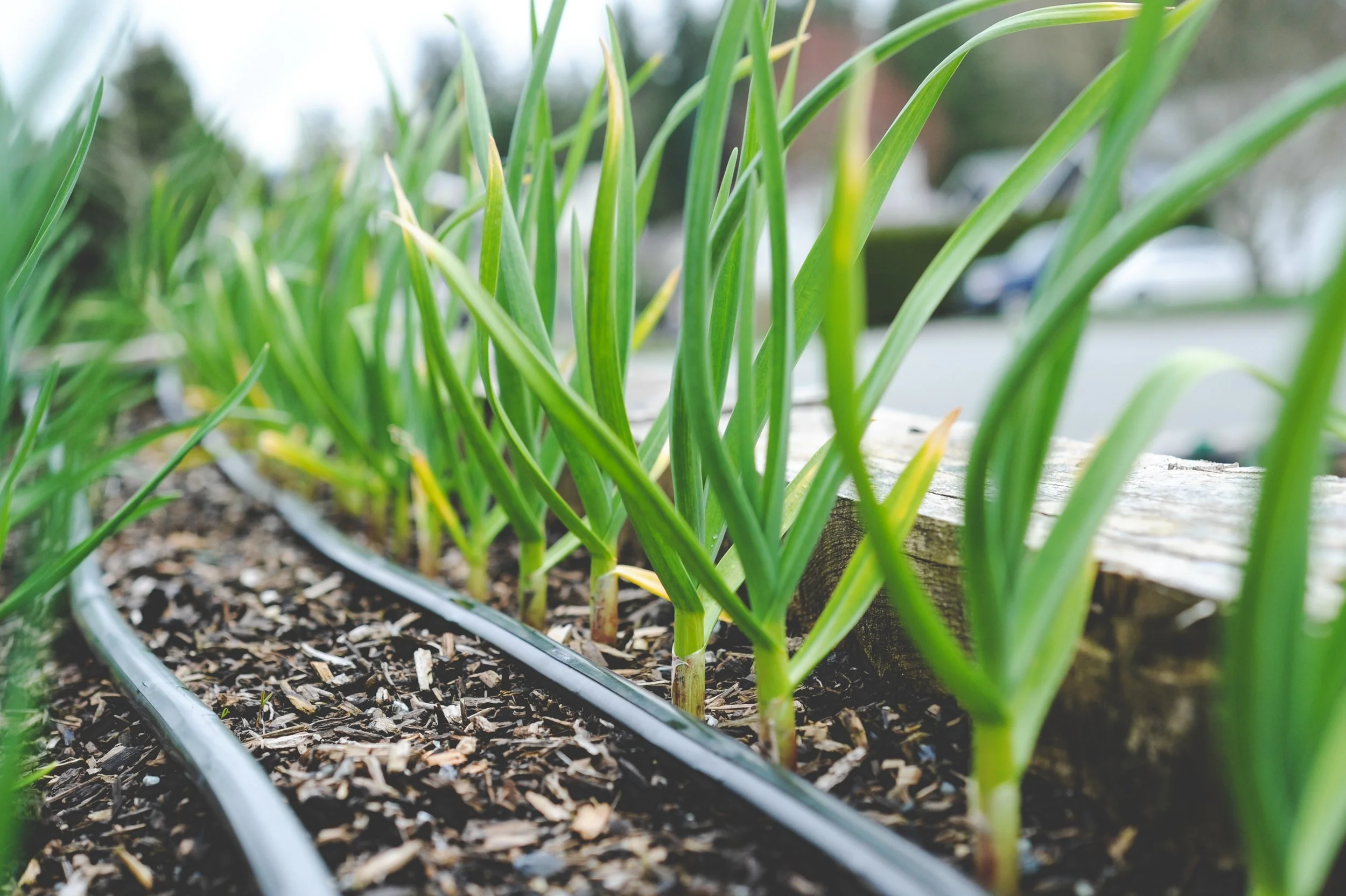
Spring garlic, growing well along drip tape. Garlic appreciates consistent watering, so we plant them along drip tapes and turn on the irrigation in the late spring.

Great varieties to plant this fall

  • Hardneck: German White, Georgian Fire, Chesnok Red

  • Softneck: Polish White, Inchelium Red

Saving your own garlic seed

We now plant our fall garlic from the heads we harvest each summer! All you need is a handful of extra disease-free heads to supply yourself with great seed garlic next fall. If you’d like to grow your own garlic seed, pop in a few extra plants this fall and read on to learn more about saving your own garlic seed!

The number of cloves varies from head to head, but we plan on 5–9 good, plantable cloves per head. Hardneck garlic almost always produces fewer cloves per head than softneck varieties.

Choosing which heads to save:
Save your best, not your leftovers. Garlic is grown from cloves, so each new plant is a copy of its parent, and big, healthy heads tend to produce big, healthy heads.

  • Pick the largest, firmest heads from your most vigorous plants.

  • Check each one closely. The wrappers should be intact, the cloves firm, and the flat base where the roots grew should be clean and solid.

  • Set aside anything soft, moldy, discolored or damaged for the kitchen.
https://shop.seattleurbanfarmco.com/products/grow-more-food-book

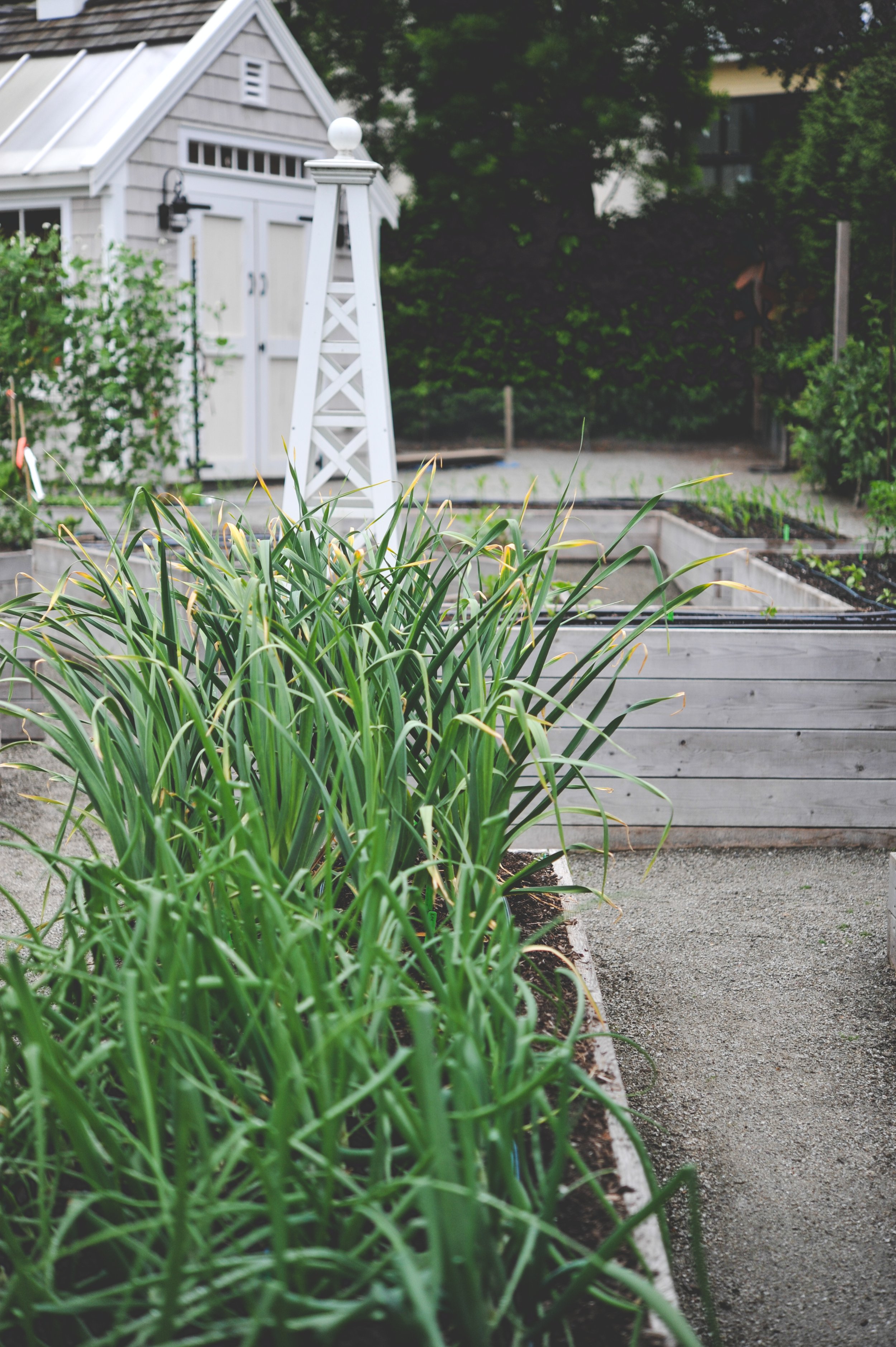
Garlic and onions sharing a raised bed. We try to always cluster our alliums, and rotate these crops to different beds each year to protect against soil-borne diseases.

Store your seed heads whole in a cool, dry, airy spot, out of the fridge. Wait to separate the cloves until a day or two before planting, then plant the biggest ones and eat the small ones.

When not to save your seed:
Because each clove is a piece of the parent plant, it can carry that plant’s problems into next year’s bed. A few cases call for caution:

  • Soil-borne disease. If plants yellowed and died back early, or the heads came up with rotting roots, white fluffy mold, or tiny black specks at the base, don’t replant from that crop. Diseases like white rot travel on cloves and can persist in soil for many years. Start again with clean seed stock from a reputable grower, and plant it in a different bed.

  • Rust. Rust shows up as orange, powdery spots on the leaves. It lives on the foliage and spreads on the wind, so the cloves themselves aren’t usually the way it returns. A light case late in the season is generally no reason to give up on saving seed. A heavy case is different: it weakens the plant and shrinks the heads, and small heads make poor seed. If rust hit hard, save only your largest heads, peel away the loose outer wrappers before storing, and clear all the old leaves out of the garden.

  • Gradual decline. If your heads get a little smaller each year despite good care, viruses or pests may be building up in your saved stock. Buying fresh seed garlic from your local nursery or trusted supplier every few years is an easy reset.


Give garlic a new bed each year:
Whether your seed is saved or bought, avoid planting garlic where garlic, onions, leeks or shallots grew in the last three to four years. Rotation is the simplest protection you have against soil-borne problems.

Happy planting!

Read and listen to more on growing garlic:
Episode 55: Harvest and Store Your Onions and Garlic
July 28, 2017
Episode 55: Harvest and Store Your Onions and Garlic
July 28, 2017

Garlic and onions are some of the most satisfying crops you can grow in your home garden. Garlic is generally planted in the Fall, and onions are among the first transplants to be tucked into the early spring garden. These crops are both ready to harvest at the onset of peak harvest season, a harbinger of the forthcoming abundance. Luckily the crops are happy to be stored away for us to enjoy during less bounteous times of year. In this episode, we’re sharing some tips that will help you know when your crops are ready to harvest and how to store them.

Read more →
July 28, 2017
Encyclopedia Botanica Podcast, Episode 38: Green Garlic
March 31, 2017
Encyclopedia Botanica Podcast, Episode 38: Green Garlic
March 31, 2017

Green sprouted garlic is somewhat of a delicacy and is usually only found at farmers markets, but is also very easy to grow! It grows fast and adds an incredible, fresh flavor to any traditionally garlic-laced meal.

Read more →
March 31, 2017
Encyclopedia Botanica Podcast, Episode 12: Planting Garlic
September 9, 2016
Encyclopedia Botanica Podcast, Episode 12: Planting Garlic
September 9, 2016

Today’s episode is all about planting garlic! In most climates, garlic is planted in the late fall and harvested mid-summer the following year. That means this is perfect time to start sourcing garlic seed, and we’re here to help you get ready. 

Read more →
September 9, 2016
Encyclopedia Botanica Podcast, Episode 7: Curing and Dry Storage
August 5, 2016
Encyclopedia Botanica Podcast, Episode 7: Curing and Dry Storage
August 5, 2016

This week we will be talking about curing and dry storage techniques for onions, garlic and winter squash.

Certain crops can be cured before eating and storing so as to improve flavor and increase storage life. Curing is the process of holding a crop at a relatively high temperature for a short period after harvest. Because the curing process varies by crop, we’ll discuss a few specifics here.

Read more →
August 5, 2016
Onions and Garlic_Seattle Urban Farm Co.
June 8, 2016
Harvest and Store Your Garlic and Onions
June 8, 2016

Garlic and onions are, in my opinion, some of the most satisfying crops to grow. They are among the first transplants to be tucked into the early spring garden, and are ready to harvest at the onset of peak harvest season, a harbinger of the forthcoming abundance. 

Read more →
June 8, 2016
June 5, 2014
Harvesting Garlic Scapes
June 5, 2014

A garlic scape is the elongated, curly stem that emerges from the central stem of hardneck garlic plants in early summer. It’s actually the precursor of the garlic’s seed head or flower. The scapes are delicious, and removing them will ultimately result in a larger bulb of garlic. 

Read more →
June 5, 2014

Encyclopedia Botanica Authors
Hilary Dahl
September 2, 2016
Hilary Dahl
September 2, 2016

Hilary Dahl is a co-owner of Seattle Urban Farm Company and host of the Encyclopedia Botanica podcast. Since 2010 Hilary Dahl has been helping beginning and experienced growers create beautiful and productive gardens. She has the unique experience of working in on a wide range of projects, from small backyard garden plots to multi-acre vegetable farms. She also works in her own garden every day after work. Hilary is also the creator of our podcast, the Encyclopedia Botanica, which she started as a way to share effective and efficient garden management techniques, and as a way to spread her love of growing food and flowers!

Read more →
September 2, 2016
Colin McCrate
October 19, 2021
Colin McCrate
October 19, 2021

Colin McCrate has been growing food organically for over 25 years. He worked on a variety of small farms in the Midwest before moving to the west coast in 2003 to teach garden-based environmental education. He founded the Seattle Urban Farm Company in 2007 with the goal of applying years of horticultural and agricultural expertise to help aspiring growers get projects off the ground or more accurately; in the ground.

Since starting Seattle Urban Farm Co in 2007, he has helped guide hundreds of urban farmers through the design, construction and management of their own edible landscape. Colin is the author of three books; Food Grown Right, In Your Backyard(Mountaineers Books, 2012) and Grow More Food (Storey Publishing, 2022); and is a garden writer for the Seattle Times.

Read more →
October 19, 2021
In Fall, Annual Vegetables Tags planting, garlic, vegetable gardening, vegetable gardening help seattle, vegetable gardening seattle
2026 Garden Shows and Festivals →
No results found
The Freyr garden trellis by Seattle Urban Farm Co
All Posts By Topic
  • Annual Vegetables 121
  • Podcast 86
  • Spring 35
  • Summer 26
  • Fall 25
  • Garden Planning 24
  • Garden Design 21
  • Harvesting 20
  • Winter 19
  • Seattle Urban Farm Co 18
  • Flowers 15
  • Soil Care 14
  • Crop Planning 11
  • Drip Irrigation 11
  • Freyr trellis 11
  • Organic Pest Control 11
  • Organic Fertilizer 8
  • Container gardening 7
  • Fruit Trees 7
  • The Urban Fringe Farm 7
  • raised beds 7
  • Herbs 6
  • Perennial Vegetables 6
  • Pollinators 5
  • Bees 4
  • Berries 4
  • Crop Storage 4
  • Microgreens 4
  • Farmers 3
  • Our Friends 3
  • Projects 3
  • Chickens 2
  • Seed Starting 2
  • 2025 events 1
  • Crop Diseases 1
  • In The Press 1
  • Question of the Month 1

Our Books:

By McCrate, Colin, Halm, Brad
Order the Freyr trellis today!

Follow Us on Instagram


Featured
DSC_9353.JPG
April 10, 2025
How to grow tomatoes
April 10, 2025

Tomatoes are an incredible crop and probably the most popular garden vegetable. The tomato originated in South America and eventually made its way into the cuisine of just about every culture on the planet.

Read more →
April 10, 2025
Harvesting-homegrown-zucchini-off-of-the-Freyr-vegetable-garden-trellis.jpg
October 30, 2023
Crops you'll love to grow on the Freyr trellis!
October 30, 2023

A surprising number of annual crops benefit from the support of a trellis. Because we love trellised crops and because we’ve been trialing a ton of varieties, we started carrying a selection of Renee’s Garden seeds in our shop! Here is a short list of some of our favorite crops and varieties to grow vertically in the garden and links to our store where you can find our favorite types:

Read more →
October 30, 2023
Drip Irrigation How-To, Part 2
October 6, 2023
Drip Irrigation How-To, Part 2
October 6, 2023

Welcome to our new YouTube series! Learn how to pick a garden site, build vegetable garden beds and install drip irrigation.

Read more →
October 6, 2023

Shop | Contact | Trellis Guide | Return policy | Our Books | Podcast | Wholesale | Subscribe

seattle urban farm company
Address: 4511 Shilshole Ave NW, Seattle, WA 98107
contact: info@seattleurbanfarmco.com

Featured in

Screen Shot 2019-04-11 at 2.13.41 PM.png
Screen Shot 2019-04-11 at 2.13.56 PM.png
Screen Shot 2019-04-11 at 2.14.09 PM.png
Screen Shot 2019-04-11 at 2.18.29 PM.png
Screen Shot 2019-04-11 at 2.20.19 PM.png

© Copyright 2024 – Seattle Urban Farm Company. All Rights Reserved.