Top
  • Home
  • Shop
  • About
  • Podcast & Blog
  • Our Books
  • Contact
  • Wholesale
Menu

Seattle Urban Farm Company - Garden trellises and supplies

Street Address
Seattle
206.816.9740
Grow a garden you love

Your Custom Text Here

Seattle Urban Farm Company - Garden trellises and supplies

  • Home
  • Shop
  • About
  • Podcast & Blog
  • Our Books
  • Contact
  • Wholesale

Organic Fertilizer Breakdown Part Two: Kelp

May 6, 2015 hilary dahl
Tomatoes_Kelp Blog_Seattle Urban Farm Co
Welcome back to our 4-part series on organic fertilizer. In part two, we will continue to break down the ingredients in our custom organic fertilizer blend. This month we will be highlighting Kelp Meal.

As we learned last month, all fertilizers are rated by their NPK ratio, which indicates the percentage of Nitrogen-Phosphorous-Potassium in the mix. This month, we will use Kelp Meal to help us take a look at the hidden world of micronutrients (sometimes referred to as trace elements), which constitute the rest of the minerals present in your organic fertilizer.   

Part Two: Kelp Meal

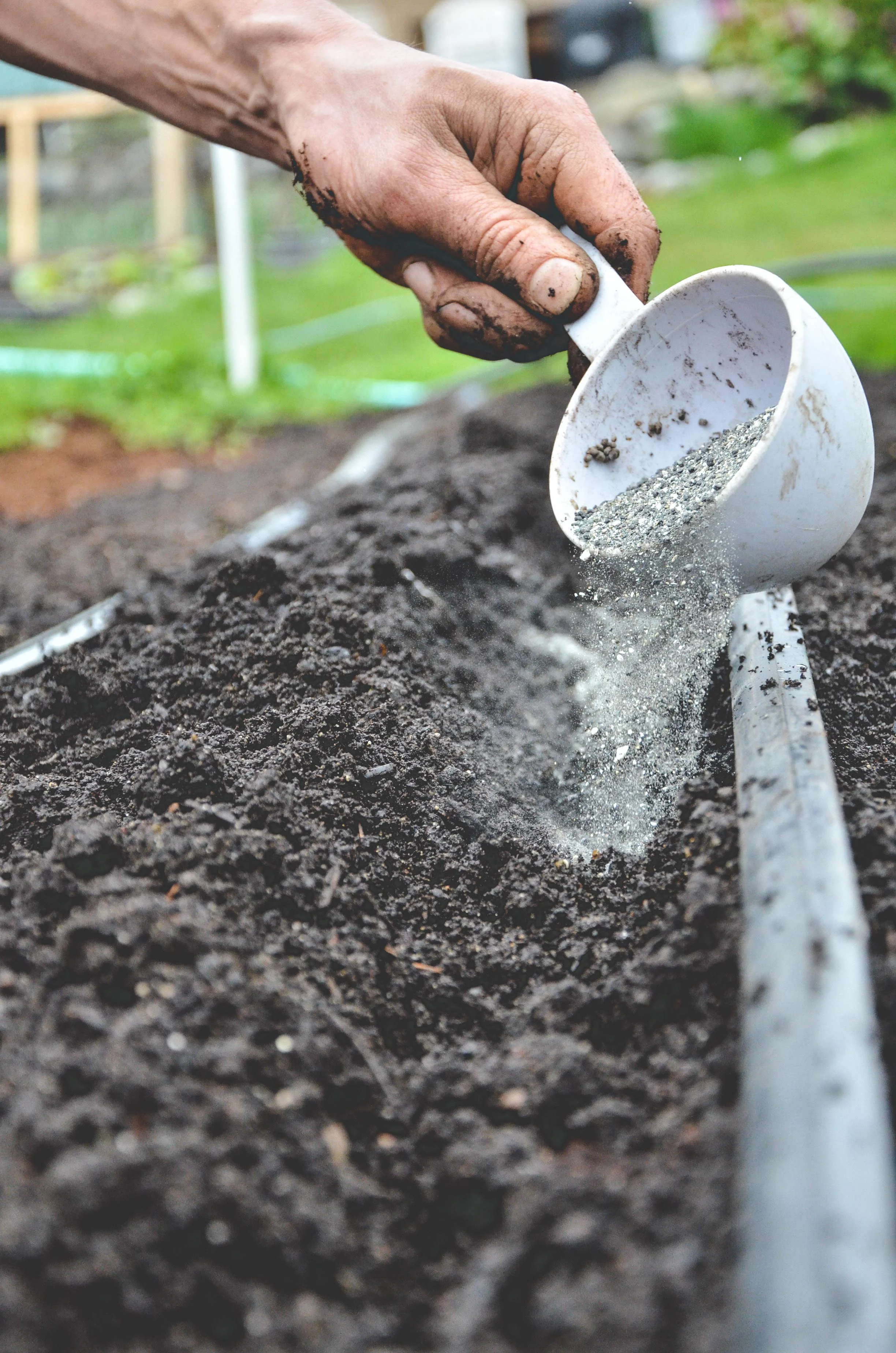
As the name indicates, Kelp Meal is made from dried ocean seaweed. Kelp can be processed into a meal (which we use in our fertilizer blend), a powder (which has finer particles and can be mixed into a liquid solution) and a liquid (which is typically diluted and applied as a foliar spray to maturing crops).  Like most granular organic fertilizers, Kelp Meal takes several weeks to several months to release its nutrients into the soil for absorption by crops.  The range of nutrients in Kelp Meal is somewhat astounding and includes Magnesium, Sulfur, Sodium, and Vanadium.  Check out this link to see a complete chemical analysis of Kelp Meal

A fundamental difference between industrial agriculture and organic agriculture is the care and attention paid to the long term health and fertility of the soil.  The organic grower’s primary concern is building a complex soil system to support crops year after year.  The application of the micronutrients supplied by Kelp Meal help do just that.  Although, each micronutrient is present in remarkably low amounts, your crops will locate them and be better able to absorb water, photosynthesize and process the macronutrients if these trace elements are available.  Furthermore, it is crucial that the trace elements are present only in low quantities, as many of them would create a toxic environment if applied in large amounts. It is easy to think of this balance in parallel to human health: for example, while Iodine is an essential mineral in your diet, an overdose would wreak havoc on your gastrointestinal and respiratory systems.  Its the same for plants and Boron or Silicon.  

We recommend using Kelp Meal as part of a balanced fertilizer blend and applying Liquid Kelp as a foliar spray to crops throughout the season.  Rough guidelines are as follows:

  • Use a balanced fertilizer including Kelp Meal when planting new vegetable crops each season. Application rates for fertilizers vary, follow the recommendations on the product label.

  • Provide a supplemental feeding of Kelp Meal to long-season fruiting crops like tomatoes and summer squash two additional times throughout the summer.

  • Foliar feed ALL crops as often as once every two weeks through the growing season with Liquid Kelp. Dilute the liquid to the rate indicated on the label and apply to crops very early in the morning. Early morning feedings allow the plants to absorb the nutrients through their opening stomata and prevent the repercussions of midday applications (possible leaf burning) and evening applications (possible fungal infection)

Products we recommend:

Dr Earth Kelp Meal

Dr. Earth Seaweed Concentrate


More on Fertilizer:
Episode 62: Vegan Fertilizer

Organic fertilizer is a key component of any vegetable garden, and today we are going to explore a specialized recipe for an organic fertilizer that is totally vegan.

Read more →
Encyclopedia Botanica Podcast, Episode 34: Phosphorus and Potassium

Welcome to part 2 of our 2-part series on organic fertilizer! In the first part of the series, we talked about Nitrogen as an essential nutrient for healthy plant growth. This week we're talking about Phosphorus and Potassium.

Read more →
Encyclopedia Botanica Podcast, Episode 33: Nitrogen

Over the next two episodes we will break down NPK, the acronym used to classify plant fertilizers. NPK stands for nitrogen, phosphorus and potassium. The letters used to represent each of these 3 nutrients are their symbols on the periodic table of elements. This week we will focus on Nitrogen, and next week we'll talk in depth about Phosphorus and Potassium. So, welcome to our 2-part series on organic fertilizer!

Read more →
Lessons from the Farm: Making Friends With Your Weeds

Weeds can be a good thing. It's seems a little counter intuitive as a gardener/farmer to say, but in a lot of ways they really are. Over the past year I started working on our certified organic Urban Fringe Farm in Woodinville. I thought it would be interesting to bring the farm experience back to the backyard by sharing some of what I've learned. The weeds on our farm have been nothing short of challenging to tame, but as I began to study the enemy, I started to realize they are just the opposite of an enemy. 

Read more →
Curbing Blossom End Rot

Blossom end rot can be an incredibly frustrating challenge for any vegetable gardener.  There is something particularly upsetting about watching a perfectly healthy-looking plant produce damaged and rotten fruits!  Fortunately, blossom end rot can be avoided and, once in process can often be overcome. 

Read more →
Seattle Urban Farm Co_Greensand Fertilizer
Organic Fertilizer Break Down Part Three: Greensand

The next stop on our path towards total fertilizer enlightenment is the wonderful world of Greensand.  As we learned in part one of our series, all fertilizers are rated by their NPK ratio, which indicates the percentage of Nitrogen-Phosphorous-Potassium in the product. Greensand (0-0-3) is a great source of Potassium and works as a component of a fertilizer mix and as a stand-alone soil amendment.  

Read more →
Organic Fertilizer Breakdown Part Two: Kelp

Welcome back to our 4-part series on organic fertilizer. In part two, we will continue to break down the ingredients in our custom organic fertilizer blend. This month we will be highlighting Kelp Meal.

Read more →
Organic Fertilizer Breakdown Part One_Blood Meal_By Seattle Urban Farm Co.
Organic Fertilizer Breakdown Part One: Blood Meal

Welcome to our 4-part series on organic fertilizer!  Over the course of this series we will break down the 4 ingredients in our custom organic fertilizer blend.  Each post will highlight one of the 4 ingredients how it benefits your vegetable garden. 

Read more →
In Organic Fertilizer Tags Organic Fertilizer, kelp, foliar feed
← Design Chat: Urban Farm Design Process With Seattle Urban Farm Co.New Greenhouse Update →
No results found
The Freyr garden trellis by Seattle Urban Farm Co
All Posts By Topic
  • Annual Vegetables 123
  • Podcast 86
  • Spring 36
  • Summer 26
  • Fall 25
  • Garden Planning 24
  • Garden Design 21
  • Harvesting 19
  • Seattle Urban Farm Co 18
  • Winter 18
  • Flowers 15
  • Soil Care 14
  • Crop Planning 11
  • Drip Irrigation 11
  • Freyr trellis 11
  • Organic Pest Control 11
  • Organic Fertilizer 8
  • Container gardening 7
  • Fruit Trees 7
  • The Urban Fringe Farm 7
  • raised beds 7
  • Herbs 6
  • Perennial Vegetables 6
  • Pollinators 5
  • Bees 4
  • Berries 4
  • Crop Storage 4
  • Microgreens 4
  • Farmers 3
  • Our Friends 3
  • Projects 3
  • Chickens 2
  • Seed Starting 2
  • 2025 events 1
  • Crop Diseases 1
  • In The Press 1
  • Question of the Month 1

Our Books:

By McCrate, Colin, Halm, Brad
Order the Freyr trellis today!

Follow Us on Instagram


Featured
DSC_9353.JPG
April 10, 2025
How to grow tomatoes
April 10, 2025

Tomatoes are an incredible crop and probably the most popular garden vegetable. The tomato originated in South America and eventually made its way into the cuisine of just about every culture on the planet.

Read more →
April 10, 2025
Harvesting-homegrown-zucchini-off-of-the-Freyr-vegetable-garden-trellis.jpg
October 30, 2023
Crops you'll love to grow on the Freyr trellis!
October 30, 2023

A surprising number of annual crops benefit from the support of a trellis. Because we love trellised crops and because we’ve been trialing a ton of varieties, we started carrying a selection of Renee’s Garden seeds in our shop! Here is a short list of some of our favorite crops and varieties to grow vertically in the garden and links to our store where you can find our favorite types:

Read more →
October 30, 2023
Drip Irrigation How-To, Part 2
October 6, 2023
Drip Irrigation How-To, Part 2
October 6, 2023

Welcome to our new YouTube series! Learn how to pick a garden site, build vegetable garden beds and install drip irrigation.

Read more →
October 6, 2023

Shop | Contact | Trellis Guide | About | Our Books | Podcast | Wholesale | Subscribe

seattle urban farm company
Address: 4511 Shilshole Ave NW, Seattle, WA 98107
contact: info@seattleurbanfarmco.com

Featured in

Screen Shot 2019-04-11 at 2.13.41 PM.png
Screen Shot 2019-04-11 at 2.13.56 PM.png
Screen Shot 2019-04-11 at 2.14.09 PM.png
Screen Shot 2019-04-11 at 2.18.29 PM.png
Screen Shot 2019-04-11 at 2.20.19 PM.png

© Copyright 2024 – Seattle Urban Farm Company. All Rights Reserved.